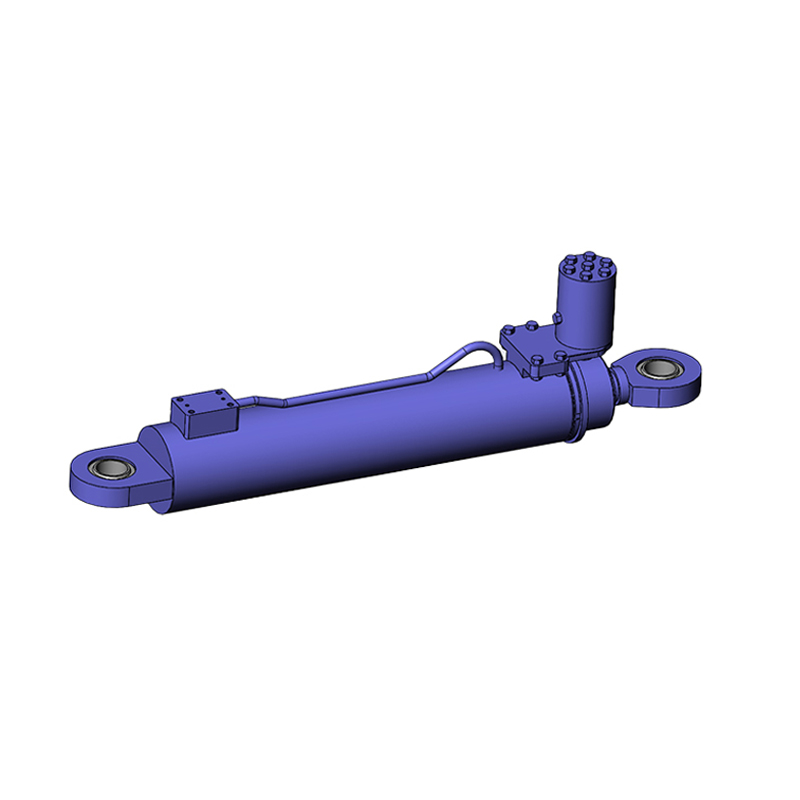
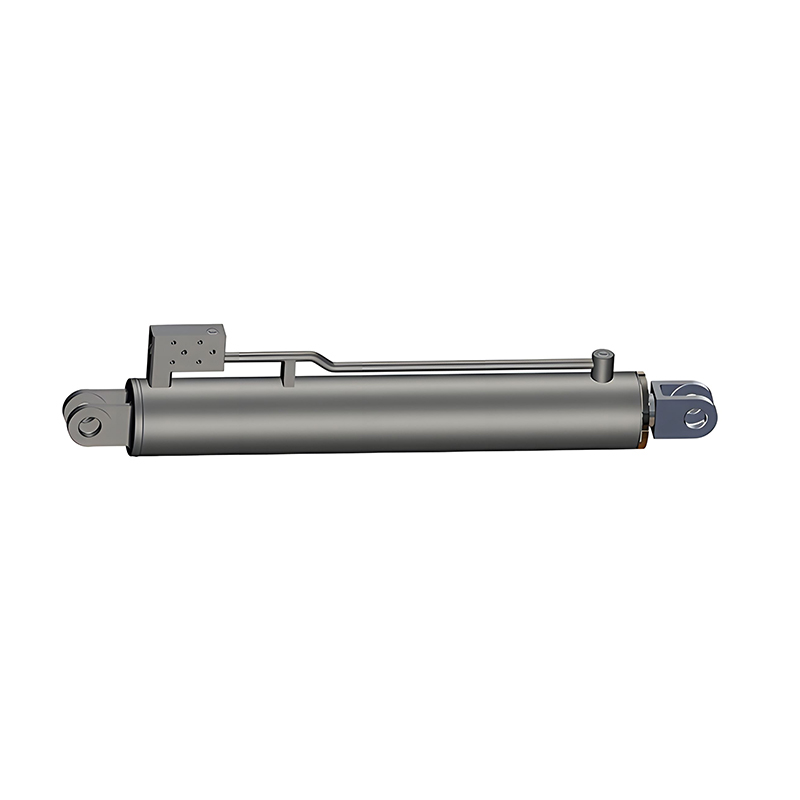
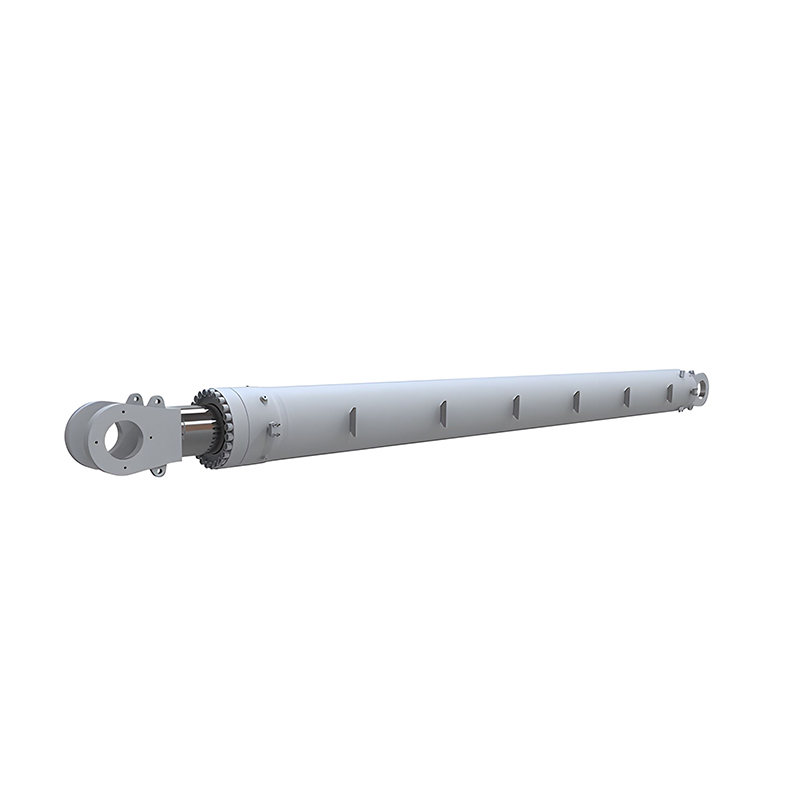
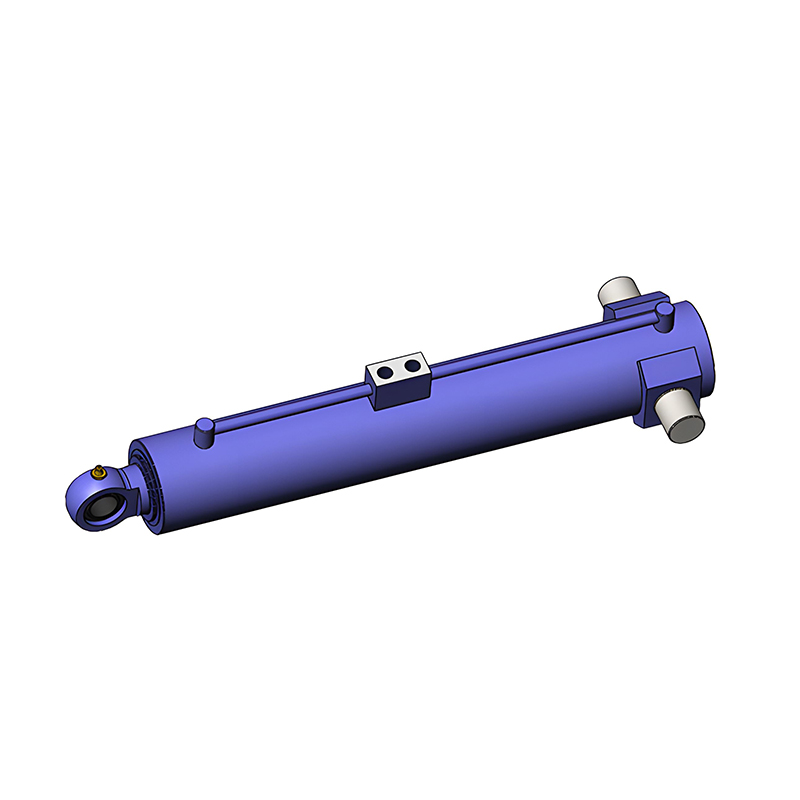
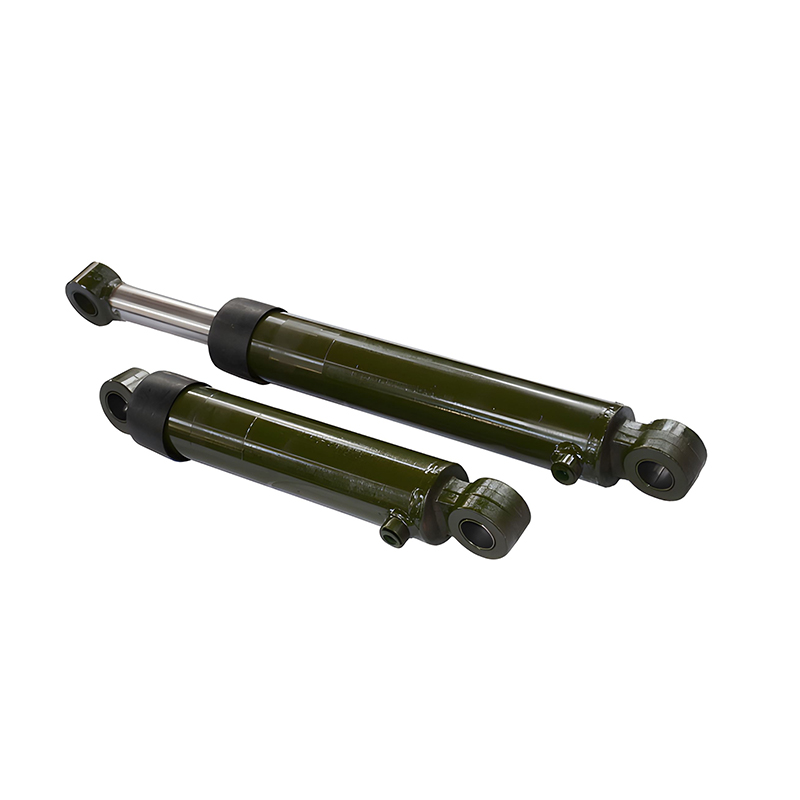
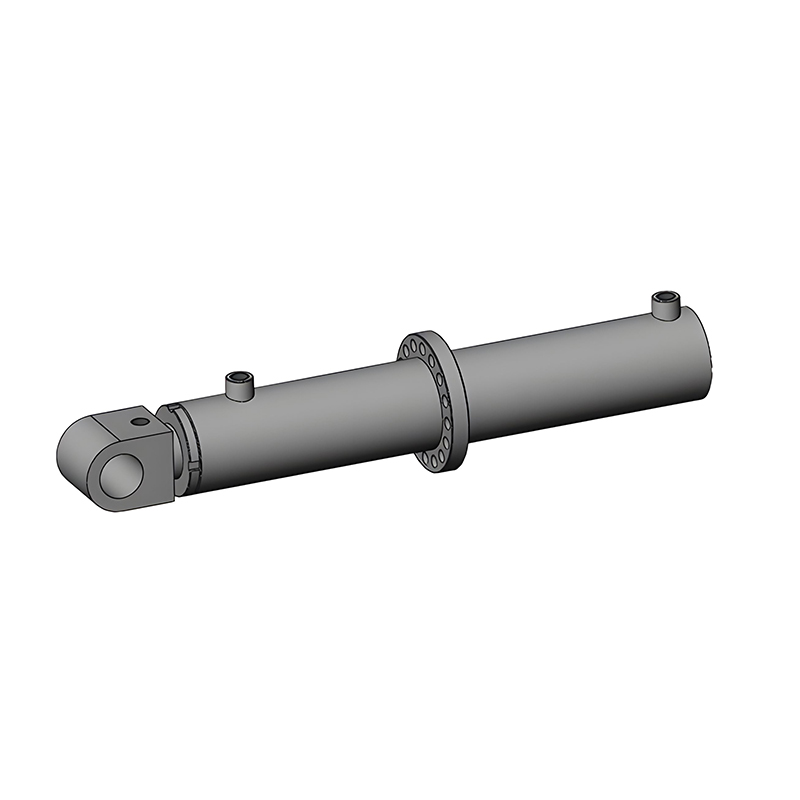
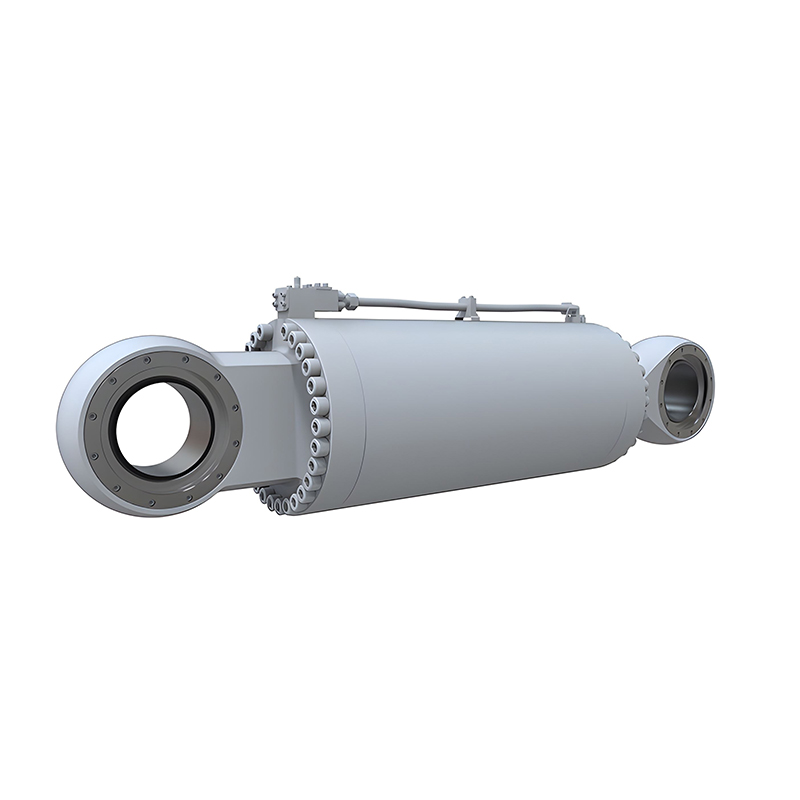
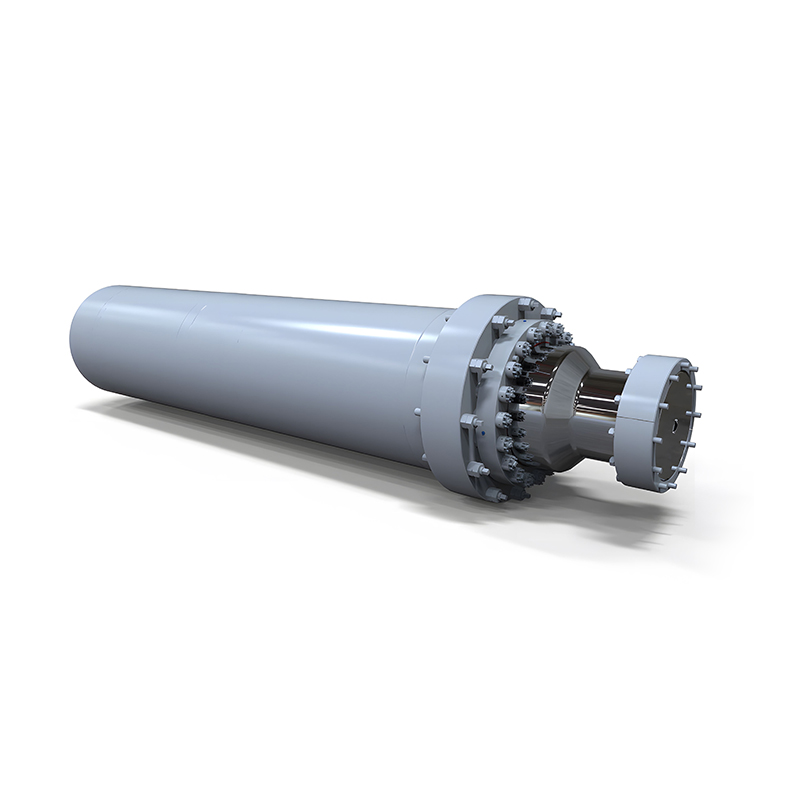
There are six primary types of hydraulic cylinders: single-acting, double-acting, telescopic, differential, tandem, and rotary. Each is designed to convert hydraulic pressure into linear or rotary mechanical force in a specific way, and the right choice depends on your required stroke length, force output, available installation space, and whether you need force in one or both directions. Understanding these differences is essential before specifying or replacing any hydraulic cylinder in industrial, mobile, or construction equipment.
How Hydraulic Cylinders Work: The Core Principle
All hydraulic cylinders operate on Pascal's Law: pressure applied to a confined fluid transmits equally in all directions. When hydraulic fluid is pumped into a cylinder chamber, it pushes against a piston, generating linear force. The force output is calculated as F = P × A, where F is force in Newtons, P is pressure in Pascals, and A is the piston area in square meters.
For example, a cylinder with a 100 mm bore operating at 200 bar (20 MPa) generates approximately 157 kN (about 16 tonnes) of push force — illustrating why hydraulics are preferred over mechanical or pneumatic systems for heavy-duty applications.
The 6 Main Types of Hydraulic Cylinders
1. Single-Acting Hydraulic Cylinder
A single-acting cylinder uses hydraulic pressure to move the piston in one direction only — typically extension. Retraction is achieved by an external force: a spring, gravity, or the load itself.
- Typical operating pressure: 50–200 bar
- Common bore sizes: 25–200 mm
- Applications: Hydraulic jacks, dump truck tailgates, forklift mast systems, agricultural presses
- Advantage: Simpler design, lower cost, requires only one hydraulic port
- Limitation: Cannot push and pull with hydraulic force; retraction speed depends on spring or load
2. Double-Acting Hydraulic Cylinder
The most widely used type in industrial and mobile equipment, a double-acting cylinder applies hydraulic pressure in both extension and retraction directions via two ports — one for each side of the piston.
- Typical operating pressure: 100–350 bar
- Applications: Excavator arms, injection molding machines, hydraulic presses, steering systems
- Advantage: Full, controllable force in both directions; precise speed and position control
- Note: Retraction force is slightly less than extension force because the rod reduces the effective piston area on the rod side
For a cylinder with a 100 mm bore and 70 mm rod at 200 bar: extension force ≈ 157 kN, retraction force ≈ 80 kN — a meaningful difference to account for in machine design.
3. Telescopic Hydraulic Cylinder
Telescopic cylinders consist of multiple nested stages (sleeves) that extend sequentially, achieving a very long stroke from a compact retracted length. They can be single-acting or double-acting.
- Number of stages: Typically 2–5
- Extended-to-retracted ratio: Up to 4:1 or higher
- Applications: Dump trucks, tipper trailers, mobile cranes, aerial work platforms
- Advantage: Long stroke in a short installation envelope
- Limitation: Force decreases with each extended stage as bore area reduces; more complex sealing
A 4-stage telescopic cylinder on a 12-metre tipper trailer may have a retracted length of only 1.2–1.5 m yet extend to over 4.5 m to achieve full body tipping angle.
4. Differential Hydraulic Cylinder
A differential cylinder is a double-acting cylinder operated in a special regenerative circuit where fluid from the rod-end is routed back into the cap-end during extension, effectively increasing extension speed. It uses the same physical cylinder but a different hydraulic circuit configuration.
- Effect: Extension speed increases by the ratio of total bore area to rod area
- Trade-off: Extension force is reduced to only the force acting on the rod cross-section area
- Applications: Hydraulic presses needing fast approach and slow, high-force pressing; clamp cylinders in manufacturing
- Advantage: Faster cycle times without increasing pump flow rate
5. Tandem Hydraulic Cylinder
A tandem cylinder places two pistons in series within a single cylinder body, sharing a common rod. Both piston chambers are pressurized simultaneously, effectively doubling the force output for a given bore size.
- Force output: Approximately 2× a single cylinder of the same bore
- Applications: Space-constrained installations requiring high force — aircraft landing gear, compact hydraulic presses, automotive production tooling
- Advantage: High force without increasing cylinder diameter
- Limitation: Longer body length than a single cylinder; more complex porting
6. Rotary (Hydraulic Actuator) Cylinder
Unlike the other types, rotary hydraulic cylinders convert fluid pressure into rotational (angular) motion rather than linear movement. They are more accurately called hydraulic rotary actuators but are classified within the hydraulic cylinder family.
- Rotation range: Typically 90°, 180°, or 270°; some designs reach 360°+
- Applications: Robotic arms, clamping fixtures, turntable indexing, rudder and flap actuation
- Advantage: Direct torque output without rack-and-pinion or crank mechanisms
- Limitation: Limited rotation angle in vane-type designs; higher cost than linear cylinders
Hydraulic Cylinder Types at a Glance
| Type |
Direction of Force |
Key Advantage |
Typical Application |
| Single-Acting |
One (extend) |
Simple, low cost |
Jacks, dump trucks |
| Double-Acting |
Both directions |
Full control, versatile |
Excavators, presses |
| Telescopic |
One or both |
Long stroke, compact body |
Tippers, mobile cranes |
| Differential |
Both (regenerative) |
High speed extension |
Fast-approach presses |
| Tandem |
Both directions |
Double force, same bore |
Aircraft, compact tooling |
| Rotary |
Rotational |
Direct torque output |
Robotics, clamping |
Summary of the six main hydraulic cylinder types, their force direction, key advantage, and typical application
Key Hydraulic Cylinder Specifications You Must Understand
Regardless of type, every hydraulic cylinder is defined by a common set of specifications that determine suitability for an application:
- Bore diameter: The internal diameter of the cylinder barrel; directly determines push force. Common industrial sizes range from 25 mm to 500 mm.
- Rod diameter: Affects pull force and column strength (resistance to buckling under compression loads).
- Stroke length: The total distance the piston travels; must match the required range of motion of the machine element.
- Operating pressure: Maximum working pressure in bar or PSI; industrial cylinders typically operate at 150–350 bar.
- Mounting style: Flange, clevis, trunnion, foot, or tie-rod; must match the load alignment and pivot requirements of the application.
- Seal material: Nitrile (NBR) for standard oils, polyurethane for wear resistance, PTFE for high-temperature or chemical environments.
How to Choose the Right Type of Hydraulic Cylinder
Selecting the correct cylinder type requires answering five practical questions:
- Do you need force in one or both directions? If only extending under load (e.g., lifting), a single-acting cylinder is sufficient and cheaper. If the cylinder must push and pull with equal control, choose double-acting.
- Is installation space restricted? If the retracted length is constrained but you need a long stroke, a telescopic cylinder is the solution.
- Do you need high force in a small bore? A tandem cylinder doubles force without increasing the cylinder diameter — critical in space-limited machine designs.
- Is cycle speed a priority? A differential circuit with a standard double-acting cylinder increases extension speed by 30–60% without adding pump capacity.
- Is the motion linear or rotational? If the mechanism requires angular movement, a rotary hydraulic actuator eliminates mechanical linkages and reduces drivetrain complexity.
Common Industries and Their Preferred Hydraulic Cylinder Types
| Industry |
Preferred Cylinder Type |
Reason |
| Construction & Earthmoving |
Double-Acting |
Full bi-directional control of boom, arm, and bucket |
| Transport & Logistics |
Telescopic (Single-Acting) |
Long stroke for tipping; gravity retracts the body |
| Manufacturing & Automation |
Double-Acting / Differential |
Precise positioning and fast cycle times |
| Aerospace & Defense |
Tandem |
High force in compact airframe envelopes |
| Agriculture |
Single-Acting / Double-Acting |
Simple, robust operation for loaders and plows |
| Robotics & Material Handling |
Rotary |
Direct angular actuation without mechanical linkage |
Preferred hydraulic cylinder types by industry sector and the engineering reason behind each selection
Maintenance Considerations for All Hydraulic Cylinder Types
Regardless of type, hydraulic cylinders share common failure modes and maintenance requirements:
- Seal leakage is the most common failure; inspect rod seals for weeping fluid and replace at the first sign of external leakage to prevent rod scoring.
- Rod surface condition: Chrome-plated rods should show no pitting or corrosion. Even minor surface damage accelerates seal wear. Re-chroming a 100 mm rod typically costs $200–$600 — far less than a full cylinder replacement.
- Fluid contamination: Particles larger than 15 microns accelerate wear on seals and the barrel bore. Maintain oil cleanliness at ISO 4406 level 16/14/11 or better for standard industrial cylinders.
- Telescopic cylinders require special attention to the intermediate stage seals, which are inaccessible without full disassembly — make external inspection for stage-to-stage leakage part of every service interval.
- Mounting hardware: Check pivot pins, clevis pins, and mounting bolts for wear and correct torque every 500 operating hours or per the OEM schedule.


 English
 中文简体
中文简体 русский
 عربى
عربى
 Custom Hydraulic Cylinders Manufacturers