English
 中文简体
中文简体 русский
 عربى
عربىOuick Product Search
Provide Hengcai OEM program, product name and other information. The content of this information is for reference only.
2026-08-26
Hydraulic cylinders fall into seven core types: tie rod, welded body, telescopic, plunger, differential, ram, and rotary cylinders. The right choice comes down to three factors — how much pressure the system runs, how long the stroke needs to be, and whether the cylinder will ever need field disassembly. Get any one of those wrong and you end up with a cylinder that either can't do the job or fails long before it should.
Below is a breakdown of each type, what sets it apart mechanically, and which jobs it actually fits — with the pressure ratings and dimensions that matter when you're specifying one.
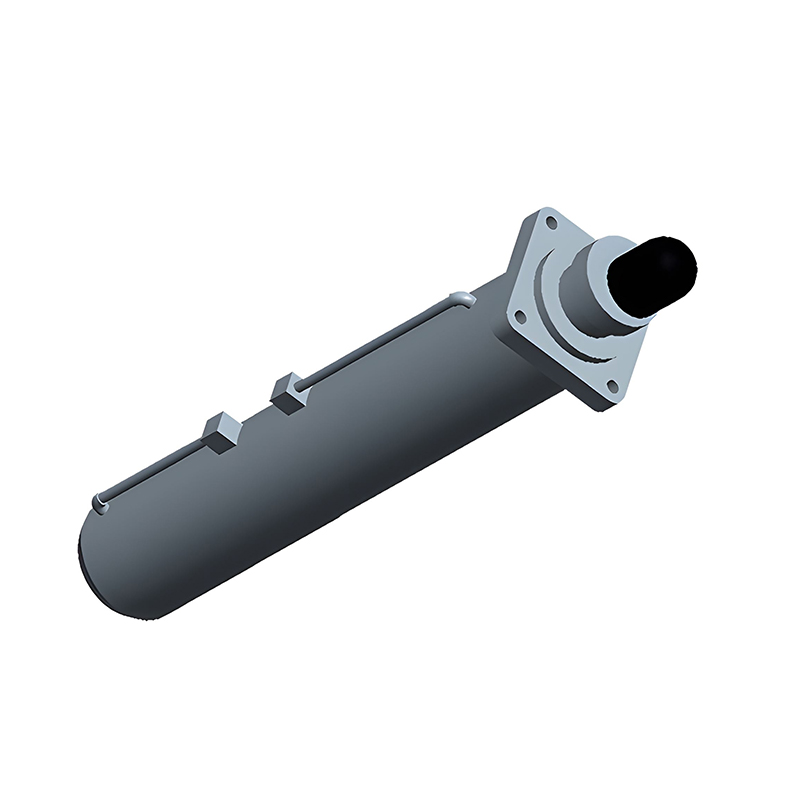
Tie rod cylinders hold their end caps to the barrel using external steel rods that run the cylinder's full length, rather than welding the caps in place. This bolted design means the entire unit can be taken apart with basic tools — a torque wrench and a socket set — which makes it the standard choice for facilities that service their own equipment.
These cylinders follow NFPA (National Fluid Power Association) standards, so bore size, rod diameter, port locations, and mounting dimensions are interchangeable across major manufacturers like Parker Hannifin, Bosch Rexroth, and Eaton. Most tie rod cylinders are rated up to 3,000 PSI, with some heavy-duty variants pushing higher depending on bore-to-rod ratio.
The trade-off is size: the tie rods and square end caps add bulk, so these cylinders need more installation space than a welded design rated for the same force. They're also the more budget-friendly option, since parts are standardized and widely stocked.
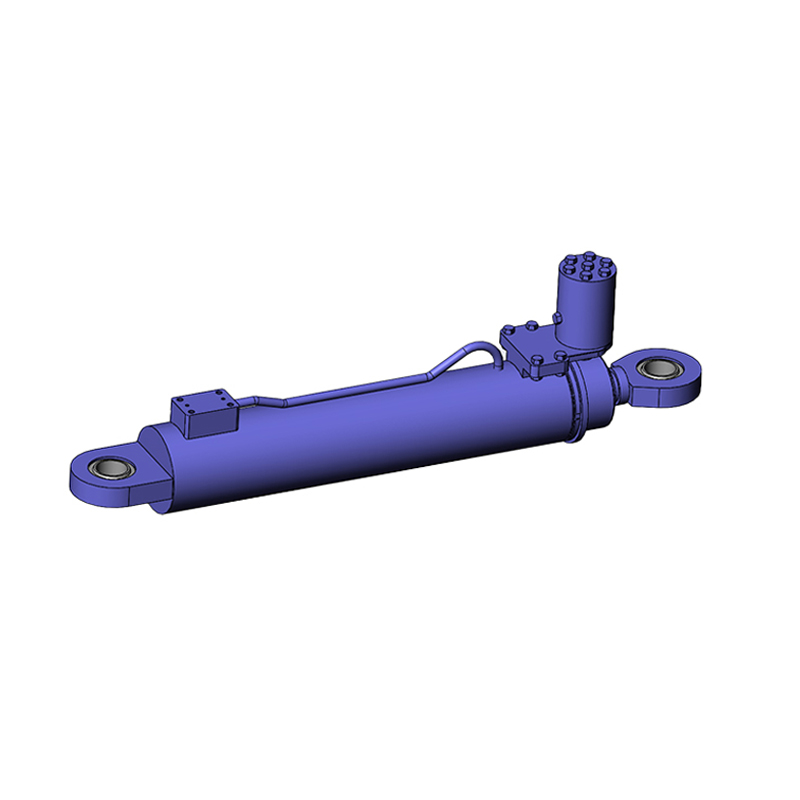
Welded cylinders fuse the barrel directly to the end caps instead of bolting them together, producing a sealed, one-piece structure. That construction removes the tie rods entirely, which is why welded cylinders are noticeably more compact than a tie rod cylinder built for the same bore and stroke.
The compactness pays off in pressure capacity. Welded cylinders routinely handle pressures above 5,000 PSI, and because there are no tie rods to stretch under repeated high-pressure cycling, they hold up better over long strokes and harsh duty cycles. This is the reason welded cylinders dominate mobile equipment — the machine needs maximum force in minimum space, and field disassembly isn't a daily requirement.
| Equipment Category | Examples |
|---|---|
| Construction equipment | Excavators, bulldozers, cranes |
| Agricultural machinery | Tractors, harvesters, loaders |
| Material handling | Forklifts, reach stackers, tail lift gates |
| Mining equipment | Hydraulic shovels, excavators |
The downside is repairability. Because the body is a single welded unit, a failed seal or damaged piston often means replacing the whole cylinder rather than rebuilding it, so weigh that against the lower unit cost when a cylinder is easy to swap out.
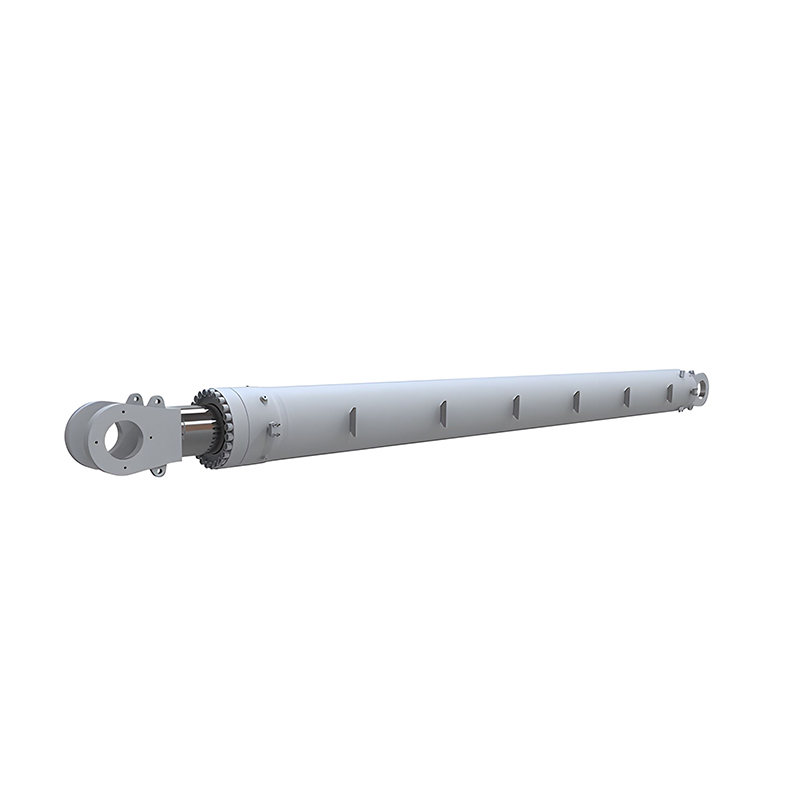
Telescopic cylinders nest multiple barrels of decreasing diameter inside one another, similar to the sections of a collapsible telescope. Each stage extends in sequence, which lets the cylinder deliver a stroke length several times longer than its retracted body — the exact solution when a long reach has to fit into a short envelope.
These come in 2, 3, 4, 5, and even 6 stages, and most are single-acting, meaning they extend under hydraulic pressure and retract using gravity or the load itself. Double-acting telescopic cylinders exist but require specialized design and cost noticeably more than the single-acting standard.
If your stroke-to-retracted-length ratio is the main constraint on the design, a telescopic cylinder is almost always the right starting point — just budget for a higher price tag than a comparable single-stage unit.
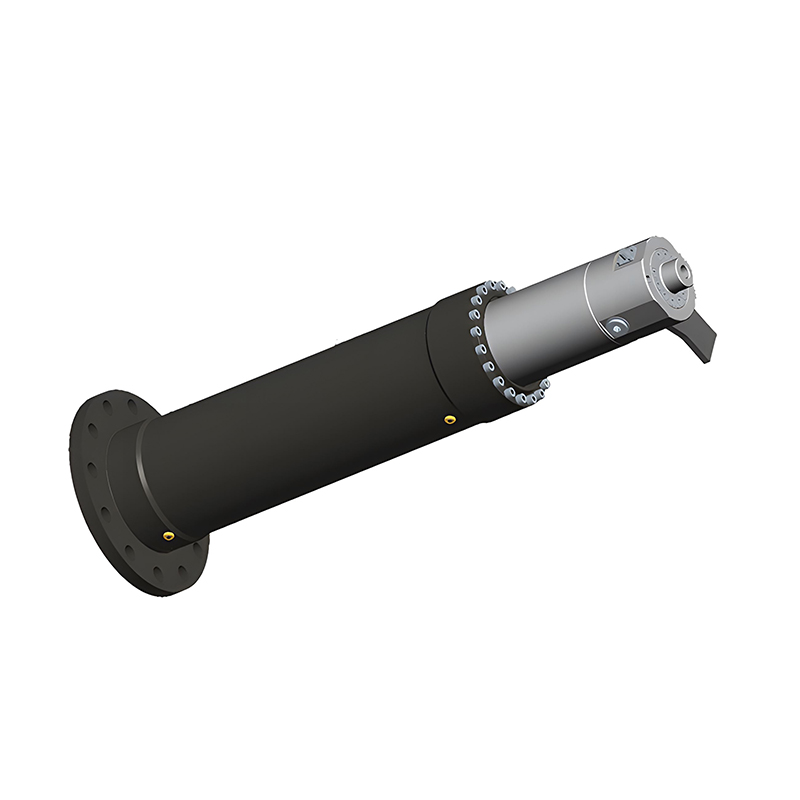
Plunger cylinders — also called ram cylinders — use a rod with roughly the same diameter as the piston bore, rather than a smaller-diameter rod attached to a separate piston. There's effectively no annular area on the rod side, so these cylinders are almost always single-acting: they push under pressure and retract by gravity, spring force, or the return stroke of the machine they're mounted in.
The oversized rod is the whole point. It resists side loading and bending far better than a conventional piston rod of the same bore, which is why plunger cylinders show up wherever the rod takes radial force in addition to axial push — not just straight-line compression.
Differential cylinders — sometimes called regenerative cylinders — route fluid so the rod-side and cap-side chambers work together during extension instead of one chamber simply draining while the other fills. Because the piston areas on each side are unequal, the cylinder produces different force and speed on extension versus retraction from the same pump output.
In practice, this means faster extension speed at reduced force, which is exactly the trade-off you want in applications where the tool needs to approach the workpiece quickly and only needs full force once it makes contact.
Four questions narrow the field quickly, and answering them in order avoids the most common specification mistakes.
| Selection Factor | Points Toward |
|---|---|
| Long stroke, short retracted envelope | Telescopic cylinder |
| High pressure, compact mobile equipment | Welded body cylinder |
| Frequent field maintenance required | Tie rod cylinder |
| Significant side or radial loading on the rod | Plunger/ram cylinder |
| Fast approach speed, high cycle count | Differential cylinder |
One more factor cuts across every type: mounting style. A cylinder that's otherwise correctly specified will still fail early if the mount introduces side loading it wasn't designed to handle. Match the mount to the actual direction of the load, not just the direction of travel, and confirm the operating environment — temperature extremes and contamination exposure — before finalizing seal material and rod plating.

Copyright © Jiangsu Hengcai Hydraulic Mechanical Co., Ltd. All Rights Reserved.
 Custom Hydraulic Cylinders Manufacturers