English
 中文简体
中文简体 русский
 عربى
عربىOuick Product Search
Provide Hengcai OEM program, product name and other information. The content of this information is for reference only.
2026-08-19
A 25-ton shop press does not need an exotic cylinder. In most builds, a single-acting tie-rod unit with a 4.5-inch bore and a 10-inch stroke, rated at 3,000 psi, delivers the tonnage and the clearance a fabricator expects. The same frame can produce roughly 42 tons by fitting a 6-inch bore cylinder on the same pump pressure, which is exactly why choosing a hydraulic press cylinder begins with arithmetic rather than with the pump or the frame. Get the bore, stroke, rod, and mounting right, and the press will repeat within tolerance for years. Get any one of them wrong, and you will chase alignment problems, leaking seals, and inconsistent bends from the day the machine first cycles.
A hydraulic press cylinder converts fluid pressure into straight-line force. The governing relationship is simple: force equals pressure multiplied by the effective piston area. Double the bore, and the area, and therefore the force, grows with the square of the diameter. At 3,000 psi, a 3-inch bore produces about 21,000 pounds, while a 6-inch bore produces about 85,000 pounds. That is why tonnage is always the first number a press builder locks down.
The second number is pressure. Press systems are typically rated at 2,500 to 3,000 psi, which is the economic middle ground between component cost and cylinder weight. Higher pressure means a smaller cylinder for the same tonnage but demands heavier hoses, robust seals, and a pump that can maintain pressure without overheating. Lower pressure means larger and heavier cylinders but gentler wear on every component. Most press builders settle on 3,000 psi as the default.
Start from the required tonnage and the available pump pressure. The formula is: bore area in square inches times pressure in psi equals force in pounds. For metric units, the same relationship holds with consistent units. The table below lists common bore sizes and the force they generate at the two most common working pressures.
| Bore (in) | Piston Area (sq in) | Force at 2,500 psi (lb) | Force at 3,000 psi (lb) |
|---|---|---|---|
| 3 | 7.07 | 17,675 | 21,206 |
| 4 | 12.57 | 31,416 | 37,699 |
| 4.5 | 15.90 | 39,760 | 47,713 |
| 5 | 19.64 | 49,087 | 58,905 |
| 6 | 28.27 | 70,686 | 84,823 |
Allow a safety margin. A press that runs at full rated tonnage on every cycle will wear seals faster and tolerate misalignment less than one that operates at 80 to 90 percent of capacity. If the application calls for 30 tons, size the cylinder for 35 to 40 tons at rated pressure.
Stroke sets the clearance envelope of the press. A 10-inch stroke handles most fabrication work; deep-draw tooling or tall parts may need 18 to 24 inches. Avoid specifying a stroke much longer than the highest workpiece. A longer cylinder is less rigid when fully extended, consumes more oil per cycle, and slows the cycle time. Choose the shortest stroke that clears the work, then add 1 to 2 inches for tooling clearance.
Working pressure ties the whole system together. If you already own a pump that delivers 2,500 psi, choose the bore that produces the required tonnage at that pressure. If you are buying a new pump set, decide whether a compact high-pressure cylinder or a bulkier low-pressure cylinder fits the press frame better. Operating speed also matters: at a given bore, more pump flow increases ram speed but also increases heat. A press cylinder that cycles slowly, such as in a straightening press, can use a small pump; a stamping press needs higher flow for a fast stroke.
The rod must resist compressive buckling over the full stroke. A long, thin rod under load will bow, and once the rod bows, the gland seal leaks and the rod surface wears unevenly. As a practical guide, press cylinders in the 4- to 6-inch bore range use rods of roughly half the bore diameter. For strokes above 24 inches, consult the manufacturer buckling chart and consider a guided platen to keep the load on the centerline.
Tie-rod cylinders are assembled with four or more high-strength steel rods holding the end caps against the barrel. They are easy to repair, since removing the rods exposes the rod and seals, and they are standardized, which keeps replacement costs low. The trade-off is a slightly larger envelope and a pressure ceiling lower than a welded body of the same weight.
Welded cylinders have the barrel and ends fused into a single piece. They handle higher pressures, resist shock loads, and fit in tighter spaces. The downside is serviceability: a welded cylinder usually needs the seal kit replaced in place, and severe internal damage can mean a new barrel. For production presses that run hot all day, welded construction is common. For a general-purpose shop press or a first build, a tie-rod cylinder is easier to live with.
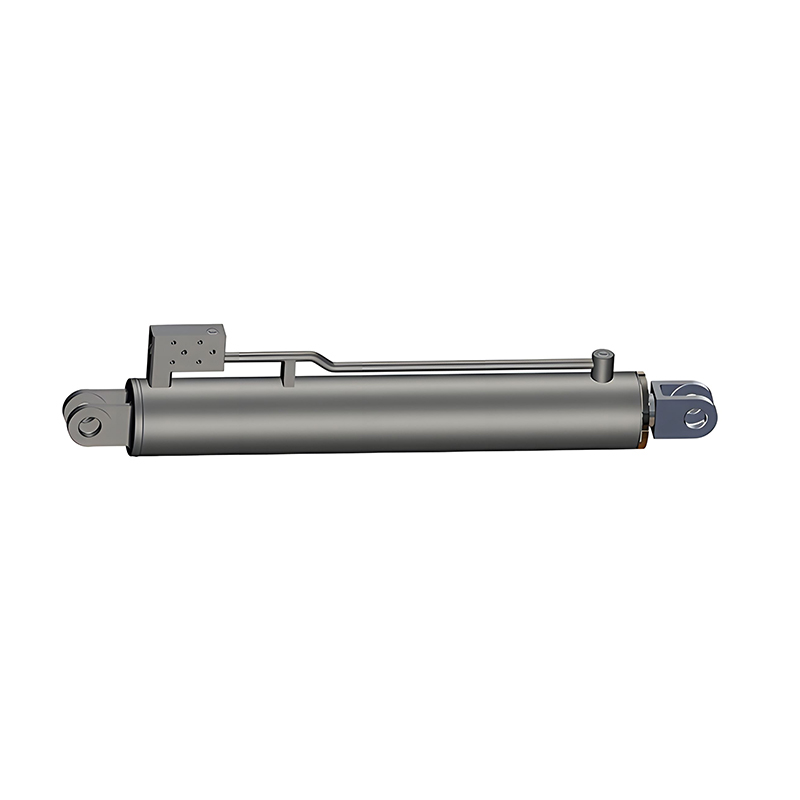
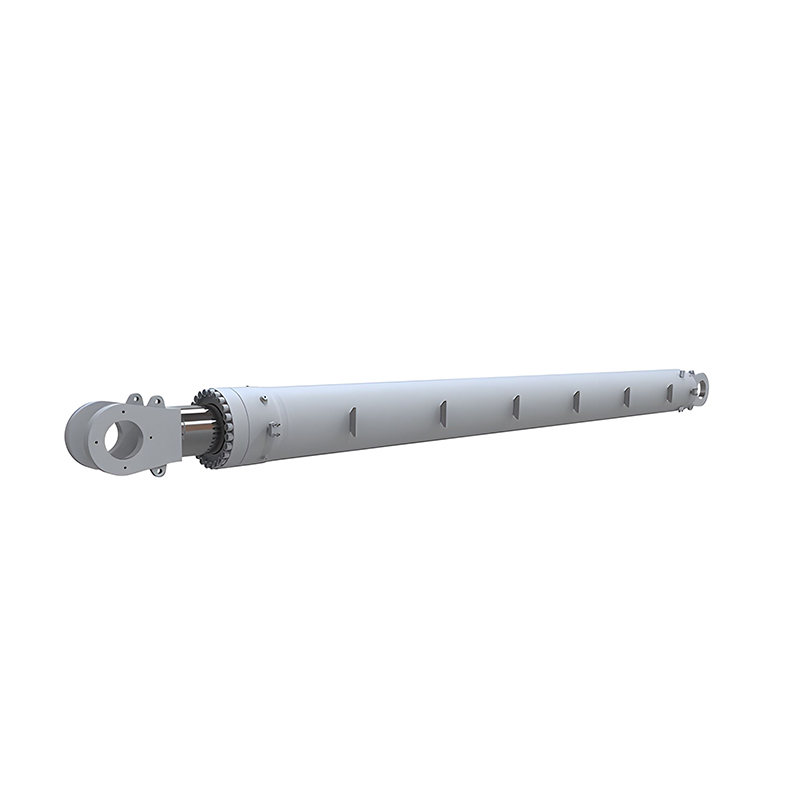
A press cylinder should push along one axis only. Misaligned dies, off-center loads, or a platen that tilts on the rod will shorten seal life and score the rod. For vertical presses, flange mounting with a guided platen is the most stable arrangement. For presses where the cylinder sits behind a linkage, a clevis mount allows natural angular movement. Whatever the mounting, align the cylinder centerline with the center of the platen, and guide the platen with columns or linear bearings so the rod never sees a side load.
Seal material follows the duty cycle. Standard nitrile handles mineral oil at temperatures to about 250°F, which suits most press work. Polyurethane gives better wear resistance in high-pressure cycles and is a common default for press rod seals. If the press runs fast or in a hot environment, PTFE-based seals handle the higher sliding speeds.
Press cylinder speed comes from pump flow. A 4-inch bore cylinder needs roughly 0.55 gallon of oil to extend the rod 10 inches. At 3 gpm, the extend time is about 11 seconds; at 6 gpm, it drops to about 5.5 seconds. Size the pump flow for the stamping or forming cycle you actually run.
Maintenance is mostly inspection: keep the chrome rod clean, watch for oil wetness at the gland, and monitor oil temperature. Drift under load usually points to seal wear or a valve leak. Rebuilding a tie-rod press cylinder is a straightforward shop job; a welded unit often goes back to the manufacturer for overhaul.
Once the tonnage, stroke, bore, rod, pressure, and mounting are defined, the supplier decision becomes practical. A manufacturer with press experience will check your mounting dimensions, confirm port sizes, and recommend a seal package for your fluid and duty cycle. Look for machine-finished tubes, hard chrome-plated rods, and a documented pressure test on each unit.
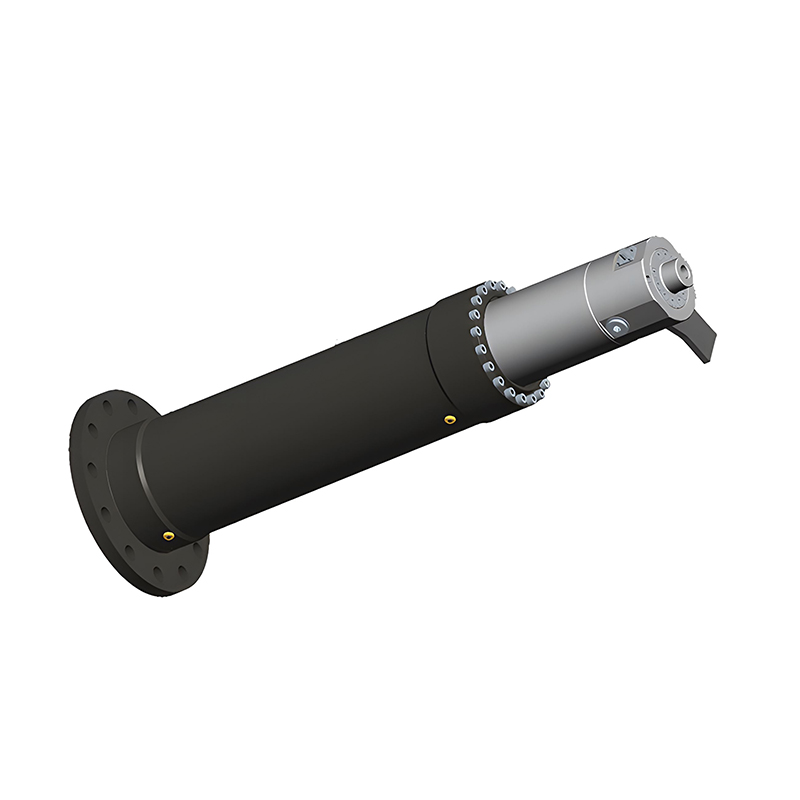
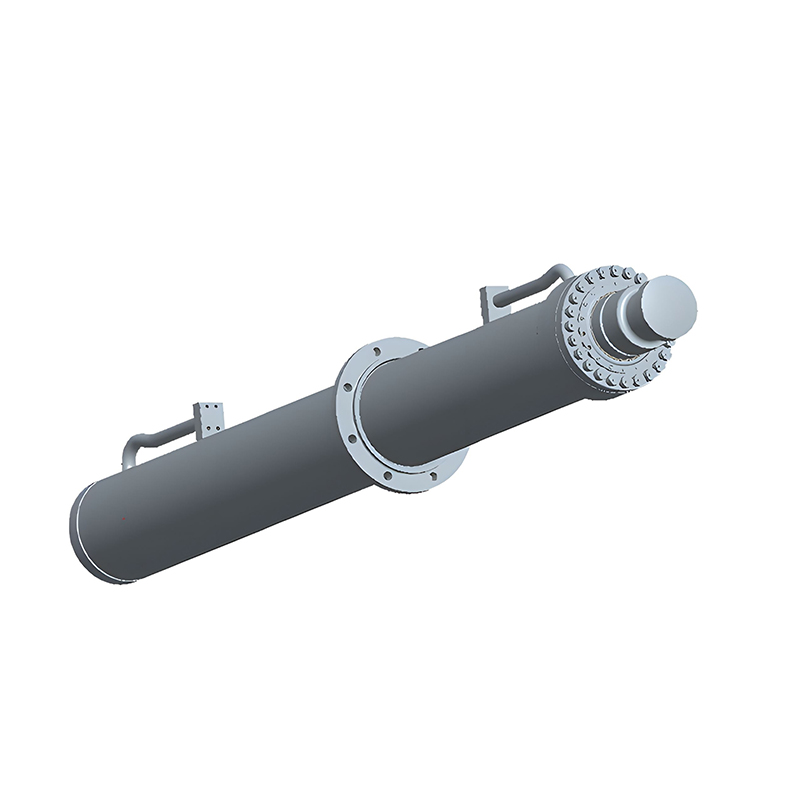
For a replacement or a custom build, send the full specification sheet, not just the tonnage. A cylinder built to your stroke, port layout, and mounting dimensions will install faster and perform better than a generic unit. That is what we build for press makers: a hydraulic press cylinder with a machined barrel, a hard chrome rod, and a seal package matched to the duty cycle. Our industrial press hydraulic cylinders range covers the standard configurations, and this technical overview of press consistency explains why force repeatability starts with the cylinder.
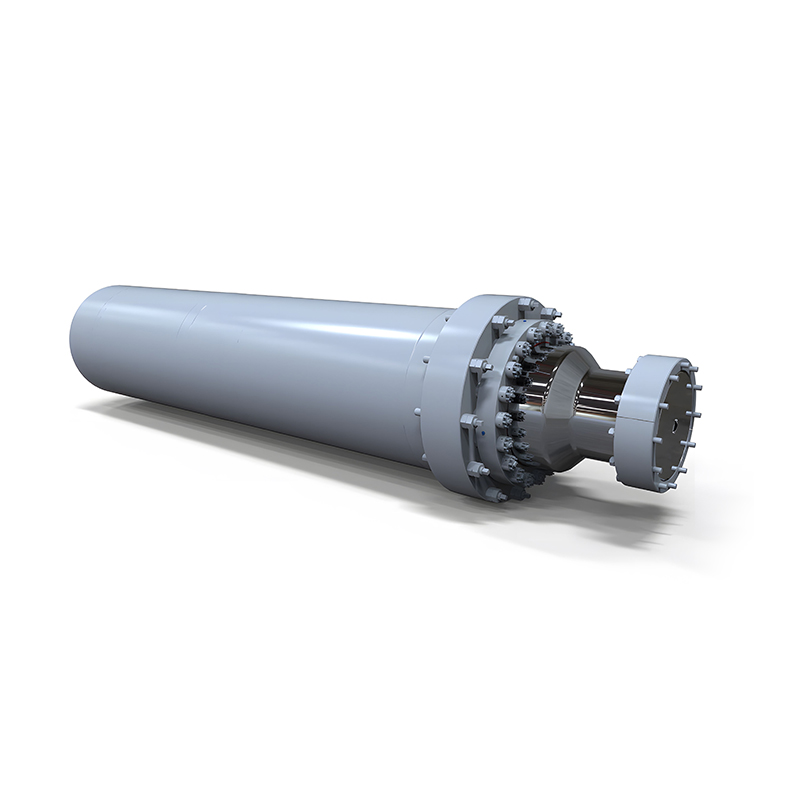 Wholesale Hydraulic Press Cylinder Manufacturers, Suppliers - Jiangsu Hengcai HyJiangsu Hengcai Hydraulic Mechanical Co., Ltd is China wholesale Hydraulic Press Cylinder manufacturers and Hydraulic Press Cylinder supp...View Product →
A hydraulic press cylinder is a straightforward component, but the choices around it, from bore and stroke to pressure and mounting, define the performance and the maintenance cost of the whole press. Work through the specifications in order, involve a manufacturer that builds cylinders for press duty, and verify the test data. That approach turns a generic part into a known quantity, and the press into a tool you can trust for years.

Copyright © Jiangsu Hengcai Hydraulic Mechanical Co., Ltd. All Rights Reserved.
 Custom Hydraulic Cylinders Manufacturers