English
 中文简体
中文简体 русский
 عربى
عربىOuick Product Search
Provide Hengcai OEM program, product name and other information. The content of this information is for reference only.
2026-04-22
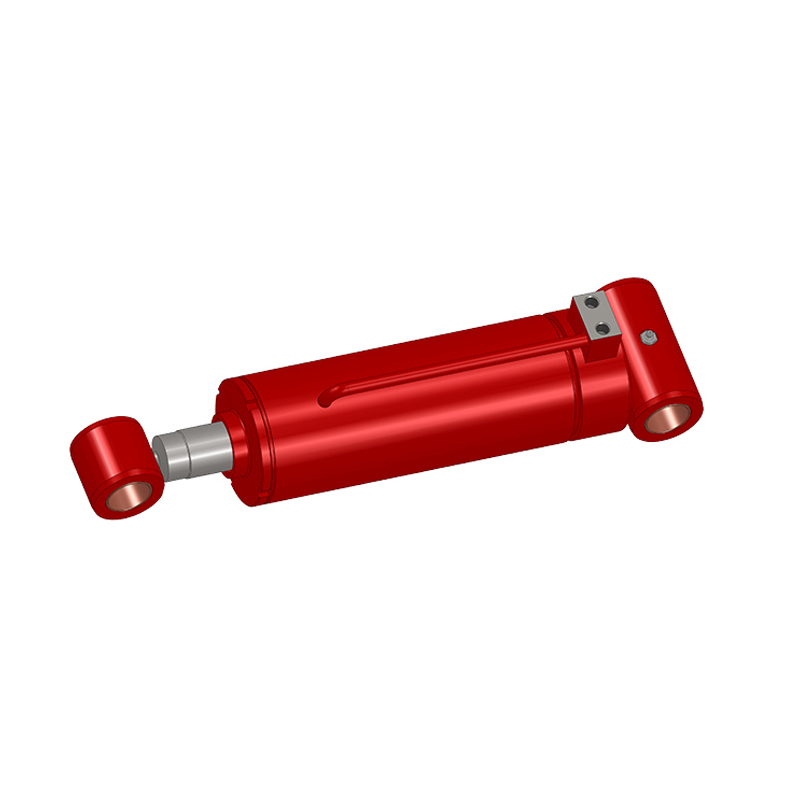
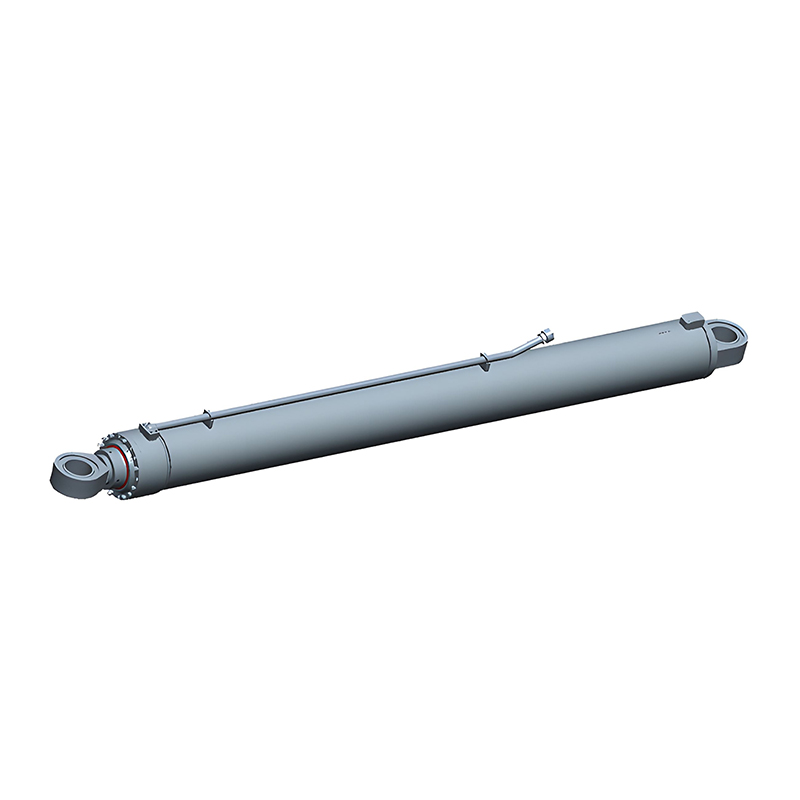
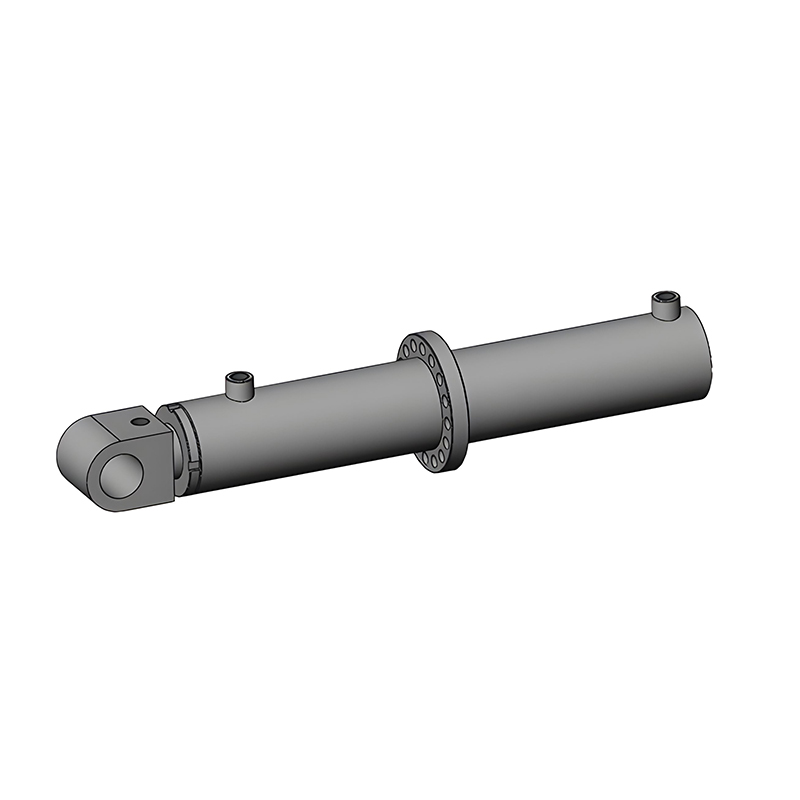
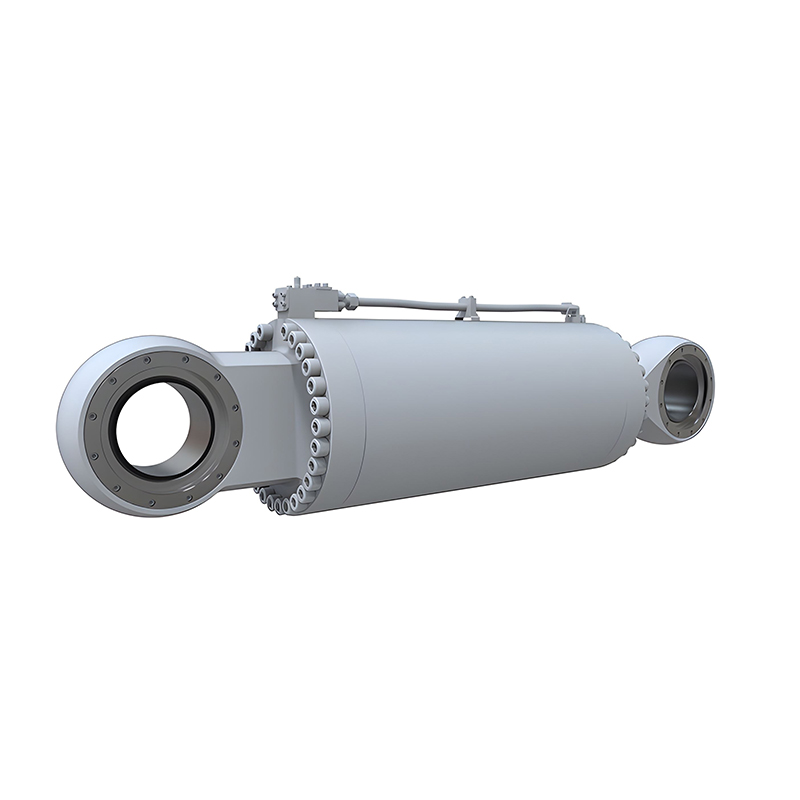
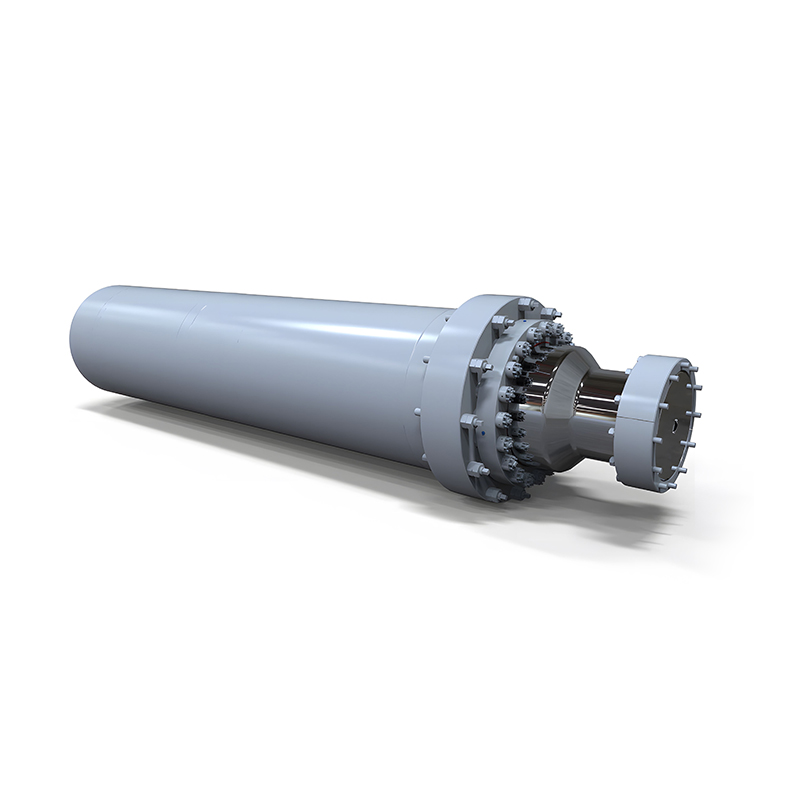
A hydraulic cylinder is a mechanical actuator that converts pressurized hydraulic fluid into linear force and motion. By applying fluid pressure to a piston inside a sealed cylinder barrel, it generates pushing or pulling forces ranging from a few hundred pounds to several million pounds — making it one of the most powerful and reliable linear actuators available in engineering. Hydraulic cylinders are the core force-generating component in excavators, cranes, presses, aircraft landing gear, injection molding machines, and thousands of other industrial and mobile applications worldwide.
The operating principle of a hydraulic cylinder is rooted in Pascal's Law: pressure applied to a confined fluid is transmitted equally in all directions. In a hydraulic cylinder, this principle is put to work as follows:
As a practical example: a cylinder with a 4-inch (101.6 mm) bore piston operating at 3,000 psi (207 bar) generates an extension force of approximately 37,700 lbf (167.7 kN) — equivalent to lifting a loaded semi-truck. This combination of compact size and massive force output is what makes hydraulic cylinders irreplaceable in heavy industry.
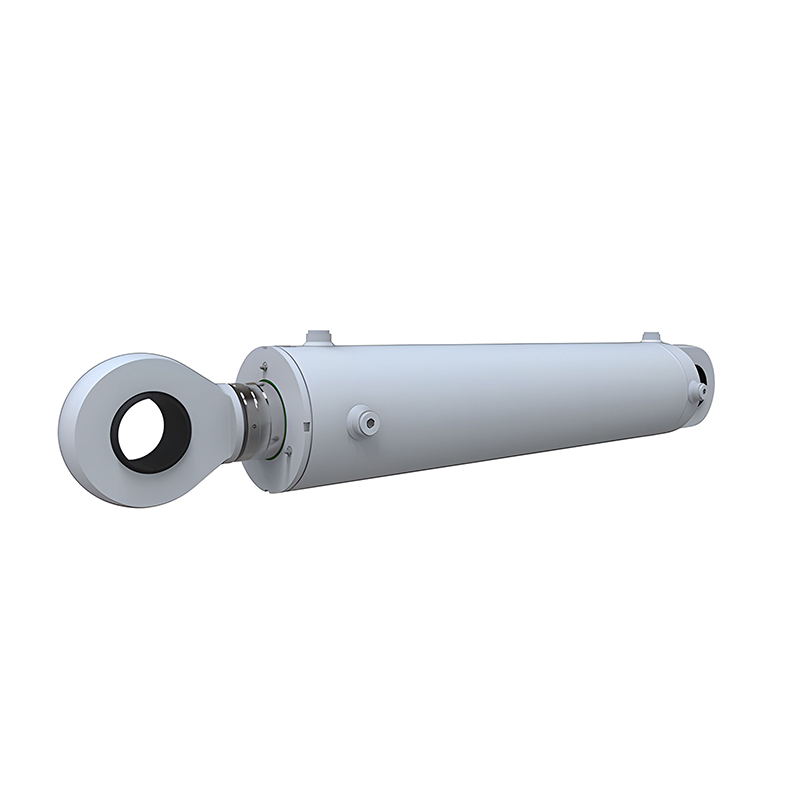
Every hydraulic cylinder consists of several precision-machined components working together as a sealed pressure vessel and force transmission system. Understanding each part is essential for proper specification, maintenance, and troubleshooting.
The barrel is the main structural body of the cylinder — a thick-walled, precision-honed tube that contains the pressurized fluid and guides the piston. It is typically manufactured from seamless cold-drawn steel (most commonly SAE 1020 or 1026 steel) with an internal bore honed to a surface finish of Ra 0.2–0.4 µm (8–16 µin) to ensure proper seal performance and minimize piston friction.
The piston is the pressure-receiving element that divides the cylinder barrel into two fluid chambers (cap-end and rod-end). It carries the piston seals that prevent cross-chamber fluid leakage while sliding along the honed bore. Pistons are typically made from ductile iron, steel, or aluminum, with groove profiles machined to accept specific seal geometries.
The piston rod transmits the linear force generated by the piston to the external load. It must withstand both compressive and tensile loads, as well as bending moments in certain mounting configurations. Piston rods are made from high-strength steel (typically SAE 1045 or 4140 steel), with the external surface hard-chrome plated to a thickness of 0.02–0.05 mm (20–50 µm) to resist corrosion, wear, and seal damage.
The cylinder head closes the rod-end of the barrel and contains the rod seals, rod wiper/scraper, and rod bearing (bushing). The rod seal prevents pressurized fluid from escaping along the rod, while the wiper seal prevents external contamination (dirt, water, dust) from entering the cylinder — one of the most common sources of hydraulic cylinder failure in mobile equipment.
The end cap closes the cap-end of the barrel and typically contains the cap-end fluid port and the cylinder's mounting attachment (such as a clevis, flange, or trunnion). In welded cylinders, the end cap is permanently welded to the barrel; in tie-rod cylinders, it is bolted in place for field serviceability.
Seals are arguably the most maintenance-critical components in a hydraulic cylinder. They include piston seals (preventing inter-chamber leakage), rod seals (preventing external leakage), wiper seals (excluding contaminants), and static O-ring seals at threaded or bolted joints. Common seal materials include polyurethane (PU), nitrile rubber (NBR), PTFE, and Viton (FKM) — selected based on fluid type, operating temperature, and pressure range.
Hydraulic ports are threaded openings in the barrel and end cap that connect the cylinder chambers to the hydraulic circuit via hoses or rigid tubing. Standard port thread types include SAE straight thread O-ring (ORB), NPT (National Pipe Taper), BSP (British Standard Pipe), and metric fittings, with SAE ORB being the preferred standard in modern hydraulic systems due to its superior leak resistance.
Hydraulic cylinders are manufactured in a wide range of configurations to suit different force, stroke, space, and mounting requirements. The main types differ in how they apply force, how they are constructed, and what applications they are optimized for.
A single-acting cylinder receives pressurized fluid on one side of the piston only (typically the cap end), generating force in one direction — the extension stroke. Return is achieved by gravity, a spring, or the weight of the load. Single-acting cylinders are simpler, lower cost, and used in applications like hydraulic jacks, dump truck beds, and log splitters where only one power stroke direction is needed.
The most common hydraulic cylinder type. Pressurized fluid can be directed to either chamber (cap end or rod end), producing powered force in both extension and retraction. This enables precise bidirectional control — critical in excavator arms, press brakes, steering systems, and robotic actuators. Because the rod occupies part of the rod-end bore area, the retraction force is always lower than the extension force at the same pressure.
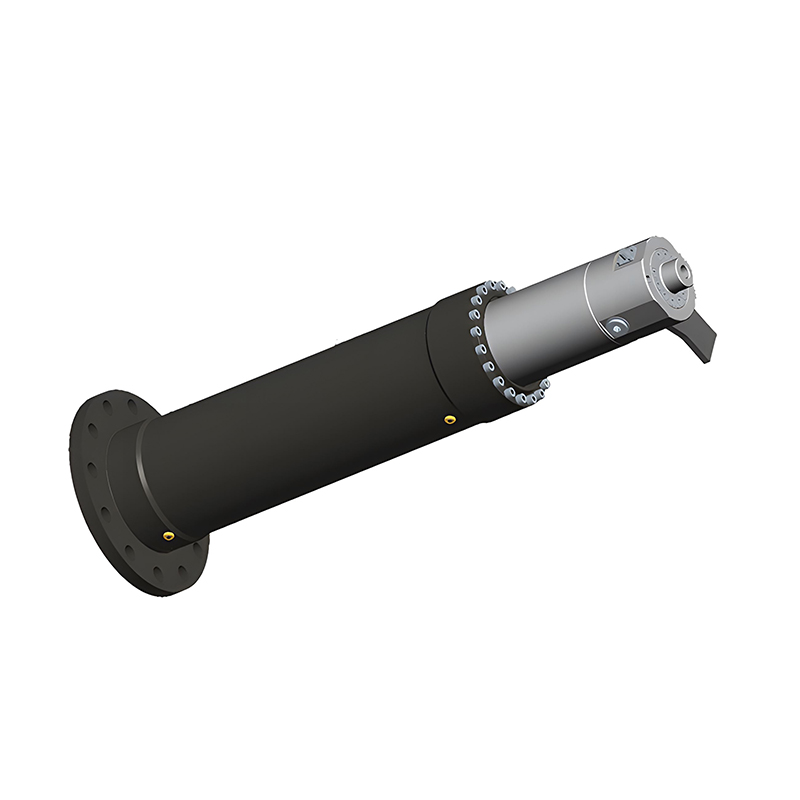
Telescoping cylinders consist of multiple nested stages (typically 2–5 stages) that extend sequentially, providing a very long total stroke from a very compact retracted length. A 5-stage telescoping cylinder can achieve a stroke-to-retracted-length ratio of up to 4:1 or higher. They are widely used in dump trucks, mobile cranes, and garbage compactors where stroke requirements far exceed the available installation space.
Tie-rod cylinders use external steel tie rods to hold the end caps against the barrel, clamping the assembly together under the internal pressure load. This construction allows the cylinder to be disassembled in the field for seal replacement and inspection without special tooling. Tie-rod cylinders are the standard design in industrial hydraulic presses, injection molding machines, and factory automation equipment where regular maintenance access is required.
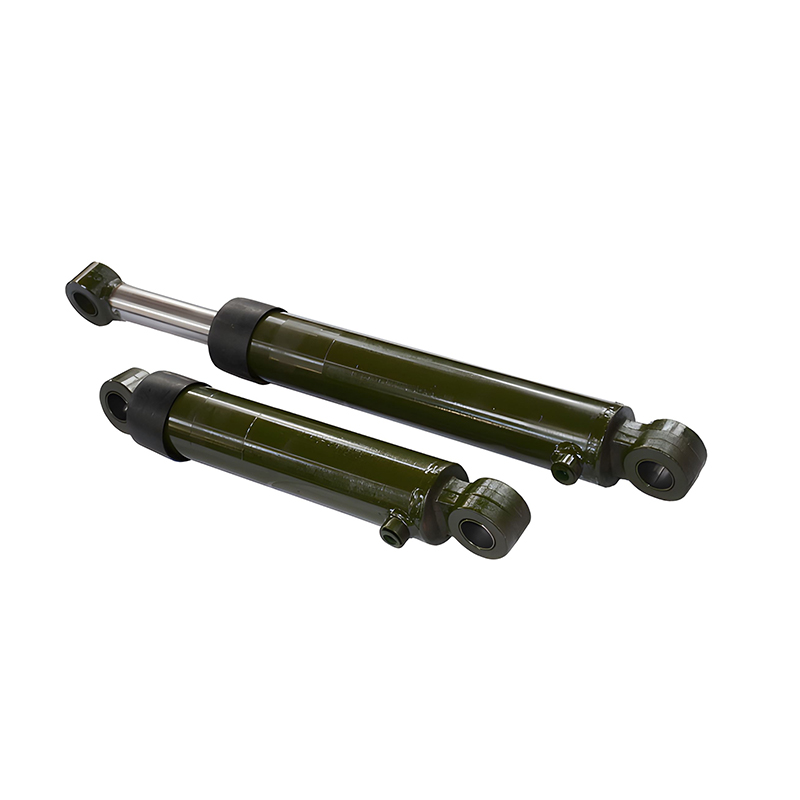
In welded cylinders, the end caps are welded directly to the barrel, creating a more compact, higher-strength assembly with no tie rods or external hardware. They withstand higher pressures and side loads than comparable tie-rod designs and are the preferred construction for mobile hydraulic equipment — excavators, bulldozers, agricultural machinery — and high-pressure applications above 5,000 psi (345 bar).
A differential cylinder connects both the cap-end and rod-end ports to the same pressure source simultaneously during extension. Because the cap-end face area is larger than the rod-end annular area, there is a net extension force. The rod-end exhaust fluid adds to the supply flow entering the cap end, increasing extension speed — often by 50–100% compared to standard operation — at reduced force. This is used in machine tool applications where rapid advance followed by high-force feed is required.
A tandem cylinder contains two pistons on a common rod within a single elongated barrel. Both pistons are pressurized simultaneously, effectively doubling the output force for a given bore diameter and pressure. This configuration is used when maximum force is required but physical bore size is constrained — for example, in aircraft actuators and compact industrial presses.
| Type | Force Direction | Construction | Typical Application |
|---|---|---|---|
| Single-Acting | One direction (extend) | One port; spring or gravity return | Hydraulic jacks, dump beds |
| Double-Acting | Both directions | Two ports; powered extend and retract | Excavators, presses, steering |
| Telescoping | One or both directions | 2–5 nested stages | Dump trucks, mobile cranes |
| Tie-Rod | Both directions | External rods; field-serviceable | Industrial machinery, presses |
| Welded | Both directions | Welded caps; compact, high-strength | Mobile equipment, high-pressure |
| Tandem | Both directions | Two pistons, one rod | Aircraft actuators, compact presses |
Selecting the correct hydraulic cylinder for an application requires understanding the primary technical specifications and how they interact to define performance.
The bore diameter is the internal diameter of the cylinder barrel and defines the piston area. It is the primary determinant of output force: a 3-inch bore cylinder at 3,000 psi generates approximately 21,200 lbf, while a 6-inch bore at the same pressure generates 84,800 lbf — four times the force for double the bore. Standard bore sizes range from 0.5 inches (13 mm) for small hydraulic tools to 24 inches (610 mm) or larger for heavy industrial presses.
Stroke is the total distance the piston rod travels between fully retracted and fully extended positions. It directly determines the range of linear motion the cylinder delivers. Longer strokes increase the risk of piston rod buckling (column failure under compressive load) — for strokes exceeding approximately 10× the rod diameter, a buckling analysis per Euler's formula is mandatory to prevent catastrophic rod failure.
Hydraulic cylinders are rated for a maximum continuous operating pressure and a peak (intermittent) pressure. Most industrial hydraulic systems operate at 1,500–3,000 psi (103–207 bar). High-performance mobile and aerospace hydraulics operate at 4,000–6,000 psi (276–414 bar). The cylinder's pressure rating is determined by barrel wall thickness, material yield strength, and end cap/tie-rod design.
The piston rod diameter must be large enough to resist buckling and bending under the maximum compressive and side loads applied during operation. Standard rod diameters range from 50% to 70% of bore diameter for typical applications, increasing to 90% or even equal to bore diameter (so-called "heavy rod" designs) in applications with significant side loading or very long strokes.
Hydraulic cylinders are available in numerous mounting configurations: clevis (pin-to-pin for applications with angular movement), flange (rigid attachment for purely axial loads), trunnion (allows rotation about a fixed pivot), foot mount, and side lug mount. The mounting style must match the load path and any angular motion requirements — mismatched mounting leads to side loading, premature seal wear, and rod bending.
Hydraulic cylinders appear in virtually every sector where controlled, high-force linear motion is needed. Their use spans from single-unit custom machinery to fleets of thousands of standardized units.
| Parameter | Hydraulic Cylinder | Pneumatic Cylinder |
|---|---|---|
| Operating pressure | 1,500–6,000+ psi (103–414+ bar) | 80–150 psi (5.5–10 bar) |
| Force output | Very high (tons to thousands of tons) | Low to medium (up to ~2,000 lbf) |
| Position holding | Excellent (incompressible fluid) | Poor (air is compressible) |
| Speed | Moderate (controlled by flow rate) | Fast (up to 10+ m/s) |
| Leak risk | Oil leaks — environmental and fire hazard | Air leak — no contamination risk |
| System complexity | High (pump, reservoir, valves, cooler) | Lower (compressor, regulator, valves) |
| Best application | Heavy lifting, high-force pressing, precise positioning | High-speed, light-force automation |
Understanding why hydraulic cylinders fail is critical for both proper design selection and maintenance planning. Industry data indicates that over 70% of hydraulic system failures are caused by fluid contamination, with seal degradation and mechanical damage accounting for most of the remainder.
Rod seal failure — evidenced by oil weeping or streaming along the rod — is the most common field complaint. Causes include rod surface damage (pitting or scoring from contamination), improper seal material for the fluid or temperature range, excessive side loading distorting the gland, and simple age-related hardening of elastomeric seals. Prevention includes specifying the correct seal material, maintaining system cleanliness (ISO 4406 cleanliness target of 16/14/11 or better), and inspecting rod surface condition during routine maintenance.
Rod buckling occurs when a long, slender piston rod is loaded beyond its Euler critical load in compression — the rod bends laterally and catastrophically. Prevention requires proper specification of rod diameter for the stroke length and mounting style, and avoiding extended exposure to shock loads beyond the cylinder's rated capacity.
The hard-chrome plating on the piston rod is both the sealing surface and the corrosion barrier. Pitting corrosion from exposure to saltwater or aggressive chemicals, mechanical impact from debris, and abrasion from contaminated seals all damage the chrome layer. Once the chrome is pitted or scored, seal life drops dramatically. Ceramic-coated and HVOF-coated rods are increasingly specified in corrosive environments as superior alternatives to conventional hard chrome.
Hydraulic cylinders are designed primarily for axial (in-line) loading. When the load path deviates from the rod centerline — due to misaligned mounting, off-center loads, or incorrect mounting style — the resulting side forces accelerate rod seal wear, rod bearing (bushing) wear, and can cause barrel distortion. Proper mounting alignment and using spherical rod eye bearings or pivot mounts where angular motion is present are the primary preventive measures.
Proper hydraulic cylinder selection requires working through a structured set of engineering parameters. Skipping any step risks under-specification (premature failure) or over-specification (unnecessary cost and weight).

Copyright © Jiangsu Hengcai Hydraulic Mechanical Co., Ltd. All Rights Reserved.
 Custom Hydraulic Cylinders Manufacturers