English
 中文简体
中文简体 русский
 عربى
عربىOuick Product Search
Provide Hengcai OEM program, product name and other information. The content of this information is for reference only.
2026-05-20
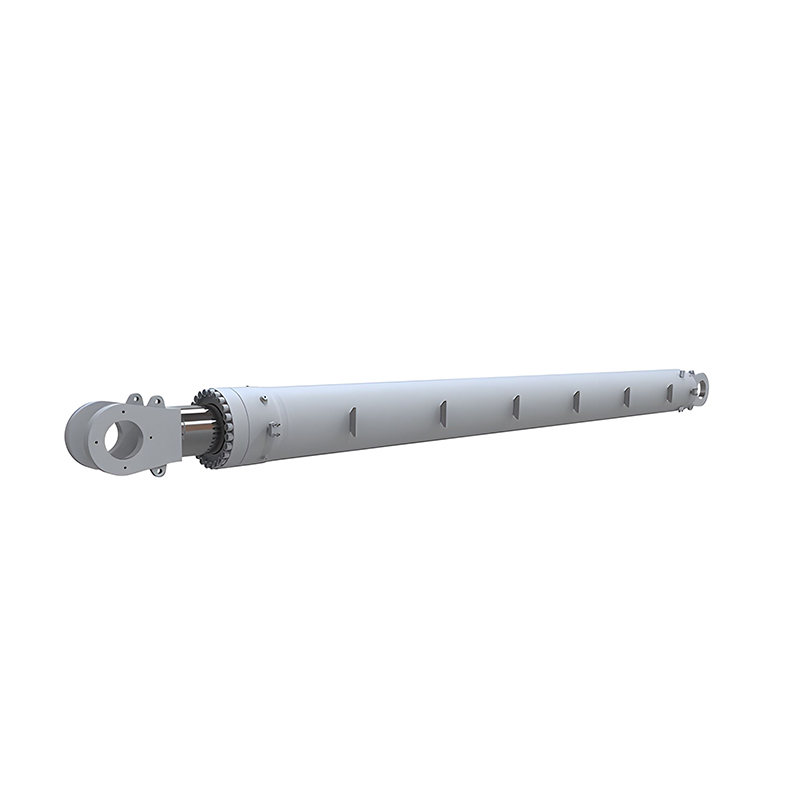
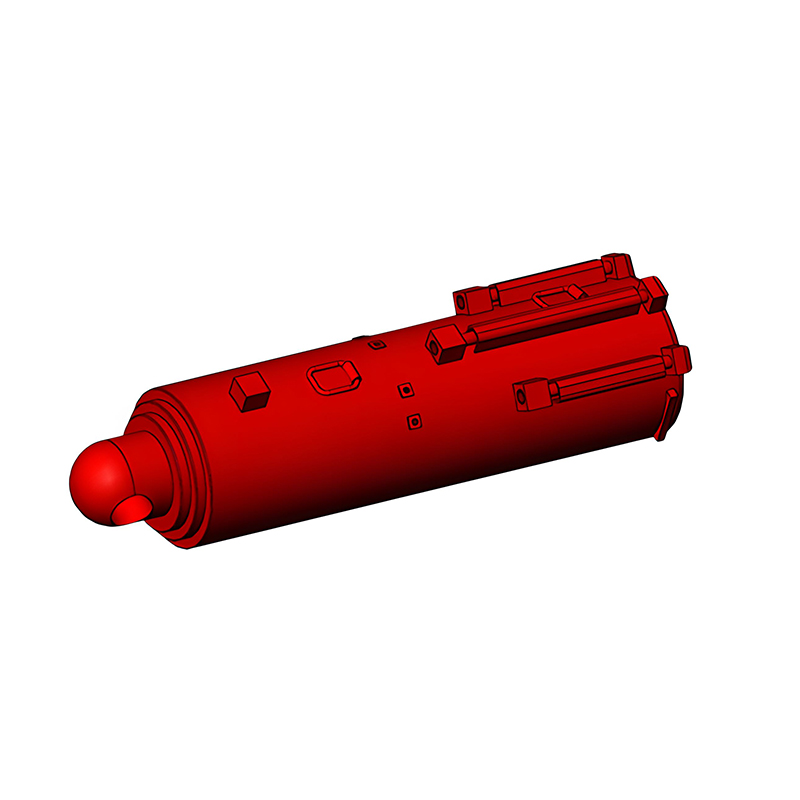
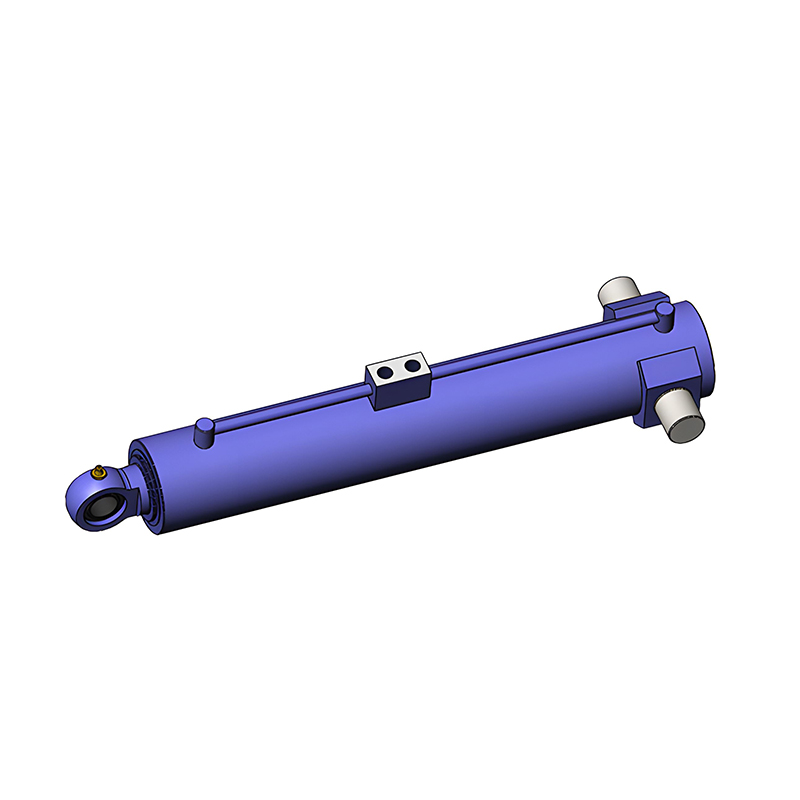
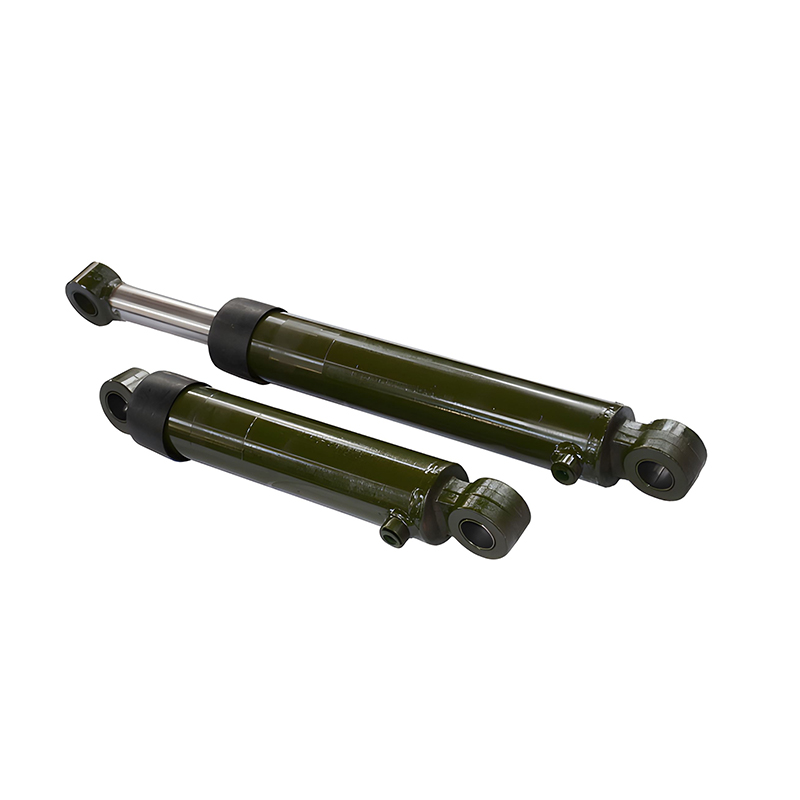
The purpose of a hydraulic cylinder is to convert hydraulic fluid pressure into controlled linear mechanical force and motion. It is the primary actuator in hydraulic systems, enabling machines to push, pull, lift, press, tilt, and clamp with forces ranging from a few hundred pounds to over one million pounds — all through a compact, sealed mechanical unit. From excavators and aircraft landing gear to industrial presses and agricultural equipment, hydraulic cylinders are the reason heavy machinery can perform precise, powerful work that no other actuator type can match at equivalent size and cost.
A hydraulic cylinder operates on Pascal's Law: pressure applied to a confined fluid transmits equally in all directions. When a hydraulic pump forces fluid into the cylinder's chamber, the pressure acts on the face of a piston, generating a linear pushing or pulling force proportional to both the fluid pressure and the piston's surface area.
The core formula is straightforward:
Force (F) = Pressure (P) × Area (A)
For example, a cylinder with a 4-inch bore piston operating at 3,000 PSI generates approximately 37,700 lbf (167.7 kN) of push force — roughly equivalent to lifting a fully loaded semi-truck. This is the fundamental reason hydraulic cylinders are irreplaceable in heavy industry.
The main components that make this possible include:
Hydraulic cylinders are designed to accomplish specific mechanical tasks. Understanding each purpose clarifies why they are specified across so many industries.
The core purpose of any hydraulic cylinder is force generation. Hydraulic systems routinely operate at pressures between 1,500 and 5,000 PSI, with specialized systems reaching 10,000 PSI or higher. At these pressures, even a modest 3-inch bore cylinder generates over 21,000 lbf. No electric motor or pneumatic actuator of equivalent size and weight approaches this force density, which is why hydraulic cylinders dominate applications requiring extreme force in constrained spaces.
Beyond raw force, hydraulic cylinders provide controllable, repeatable linear motion. By regulating fluid flow rate into the cylinder, operators control both the speed and position of the piston rod with high accuracy. Modern servo-hydraulic cylinders used in testing and aerospace applications achieve positional accuracy within ±0.001 inches (0.025mm), combining massive force capability with precision rivaling electric actuators.
A hydraulic cylinder can hold a load in a fixed position indefinitely without continuous energy input, simply by closing the hydraulic circuit. This makes hydraulic cylinders ideal for clamping, pressing, and load-holding applications where a mechanism must remain under force for extended periods — something that electric motors cannot do without continuous current draw and heat generation.
Double-acting hydraulic cylinders — the most common type — can exert controlled force in both the extension (push) and retraction (pull) directions. This bidirectional capability is essential in applications like excavator arms, steering systems, and press brakes, where the machine must apply force in both directions of travel.
Different cylinder designs serve different functional purposes. Selecting the correct type is as important as sizing it correctly.
| Type | How It Acts | Primary Purpose | Common Applications |
|---|---|---|---|
| Single-Acting | Hydraulic pressure extends; spring or gravity retracts | One-directional force output | Jacks, lift tables, clamps |
| Double-Acting | Hydraulic pressure extends and retracts | Bidirectional controlled motion | Excavators, press brakes, steering |
| Telescopic | Multiple nested stages extend sequentially | Very long stroke in compact retracted length | Dump trucks, mobile cranes, tippers |
| Differential | Rod-end fluid routes to cap-end during extension | Faster extension speed with existing pump flow | Injection molding, fast-acting presses |
| Tandem | Two pistons on one rod in series | Double force output at same bore size | Aircraft systems, high-force compact designs |
| Plunger (Ram) | Single-acting; rod acts as piston | High-load pushing in one direction | Hydraulic presses, punching machines |
Hydraulic cylinders are among the most broadly deployed mechanical components in the world. Their ability to deliver massive, controllable force in compact form makes them indispensable across dozens of sectors.
Excavators, bulldozers, backhoe loaders, and cranes rely on multiple hydraulic cylinders for every primary movement. A standard 20-ton excavator uses five or more hydraulic cylinders — boom, arm, bucket, and swing — each capable of exerting tens of thousands of pounds of force. The boom cylinder alone on a large mining excavator can generate over 500,000 lbf.
Tractors use hydraulic cylinders to raise and lower implements (plows, harrows, seeders) via the three-point hitch system. Combine harvesters use them for header height adjustment and unloading auger positioning. Modern precision agriculture equipment uses servo-hydraulic cylinders for automatic section control and variable-rate application systems.
Hydraulic cylinders power metal stamping presses, forging hammers, injection molding machines, and bending brakes. A typical hydraulic press brake for sheet metal bending uses cylinders generating 50 to 1,000 tons of force. Hydraulic forging presses used in aerospace component manufacturing can reach 50,000 tons (110 million lbf) — forces impossible to achieve with any other actuator technology.
Dump trucks use telescopic hydraulic cylinders to raise their beds. Forklifts use double-acting cylinders for mast lifting and tilt. Aircraft landing gear retraction and extension, cargo door actuation, and flight control surfaces in larger aircraft all rely on hydraulic cylinders, where system pressures of 3,000–5,000 PSI are standard in aviation hydraulic circuits.
Ship steering gear (rudder actuation), anchor windlass systems, hatch cover operation, and offshore platform jack-up legs all use large hydraulic cylinders. Offshore jack-up rig legs use hydraulic cylinders or hydraulic rack-and-pinion systems capable of lifting platform structures weighing tens of thousands of tons.
Specifying a hydraulic cylinder correctly requires understanding the parameters that define what it can and cannot do in a given application.
Understanding why hydraulic cylinders are chosen over alternatives clarifies their unique purpose in engineering design.
| Criterion | Hydraulic Cylinder | Pneumatic Cylinder | Electric Linear Actuator |
|---|---|---|---|
| Force Output | Very High (up to millions of lbf) | Low–Moderate (up to ~10,000 lbf) | Low–High (varies widely) |
| Positional Accuracy | High (servo-hydraulic: ±0.001 in) | Low (compressible fluid) | Very High |
| Power Density | Excellent | Good | Moderate |
| Load Holding (no energy) | Yes (closed circuit) | Poor (leakage) | Yes (self-locking screw) |
| Contamination Risk | Moderate (fluid leaks possible) | Low | Very Low |
| Operating Temperature Range | Wide (-40°F to 250°F typical) | Wide | Moderate (electronics-limited) |
Understanding failure modes is critical for anyone responsible for maintaining hydraulic systems. Over 70% of hydraulic cylinder failures are directly attributable to contamination, improper installation, or deferred maintenance.
Recommended Products

Copyright © Jiangsu Hengcai Hydraulic Mechanical Co., Ltd. All Rights Reserved.
 Custom Hydraulic Cylinders Manufacturers