English
 中文简体
中文简体 русский
 عربى
عربىOuick Product Search
Provide Hengcai OEM program, product name and other information. The content of this information is for reference only.
2026-09-30
How are hydraulic cylinders made? It is a question every design engineer and maintenance team asks sooner or later, because a hydraulic cylinder is only as reliable as the process behind it. From the steel tube that becomes the barrel to the chrome-plated rod that extends under load, every step determines whether the component delivers years of dependable service or fails long before its time.
At Jiangsu Hengcai Hydraulic Mechanical Co., Ltd., we have spent more than three decades refining this process. Our facility in Jiangsu Province produces cylinders for construction, mining, marine, logistics, sanitation and agricultural equipment, and every unit follows the same disciplined route from raw material to test bench. We published a shorter overview on how hydraulic cylinders are made, but here we want to walk you through the full journey the way we run it in our workshop.
Every cylinder begins with material selection. The barrel is normally cut from seamless steel tube, chosen for strength, uniform wall thickness and the ability to hold high internal pressure. For demanding bore finishes we use precision-honed tubes, because the inside surface of the barrel has a direct effect on seal life, friction and internal leakage.
The piston rod is next in importance. We use high-strength steel that is turned, ground and then hard-chrome plated to resist corrosion and wear. The piston is usually machined from ductile iron or steel, while end caps, clevises and mounting brackets are produced from steel forgings or machined plate. Seals are selected from polyurethane, NBR and PTFE families depending on pressure, temperature and fluid compatibility.
Getting these details right starts with the raw material. Our hydraulic cylinder barrels are sourced and machined to tight dimensional standards, which is why we keep this step in-house.
| Component | Typical Material | Role in the Cylinder |
|---|---|---|
| Barrel tube | Seamless carbon steel, honed or drawn | Contains pressure; bore finish determines seal performance |
| Piston rod | Hardened steel with hard-chrome plating | Transmits force; surface resists wear and corrosion |
| Piston | Ductile iron or steel | Converts pressure into mechanical thrust |
| End caps | Steel forgings or machined plate | Close the cylinder; house ports and mounting points |
| Seals | Polyurethane, NBR, PTFE | Contain pressure and keep contamination out |
Once the tube is cut to length, the real work begins. Rough boring opens the bore to near-final size, and then honing brings it to the exact dimension and surface finish required. Honing is a precision process that removes a thin layer of metal while creating a cross-hatch pattern on the bore surface. That pattern holds a microscopic film of oil, allowing the seal to glide smoothly over the surface.
Typical bore tolerances and finishes for quality cylinders fall within these ranges:
For heavy-duty machines such as excavators, the barrel must also withstand high peak pressures and repeated shock loads. We machine every barrel to the same disciplined standard, whether it is a compact cylinder for a skid steer or a large-bore unit for a mining truck.
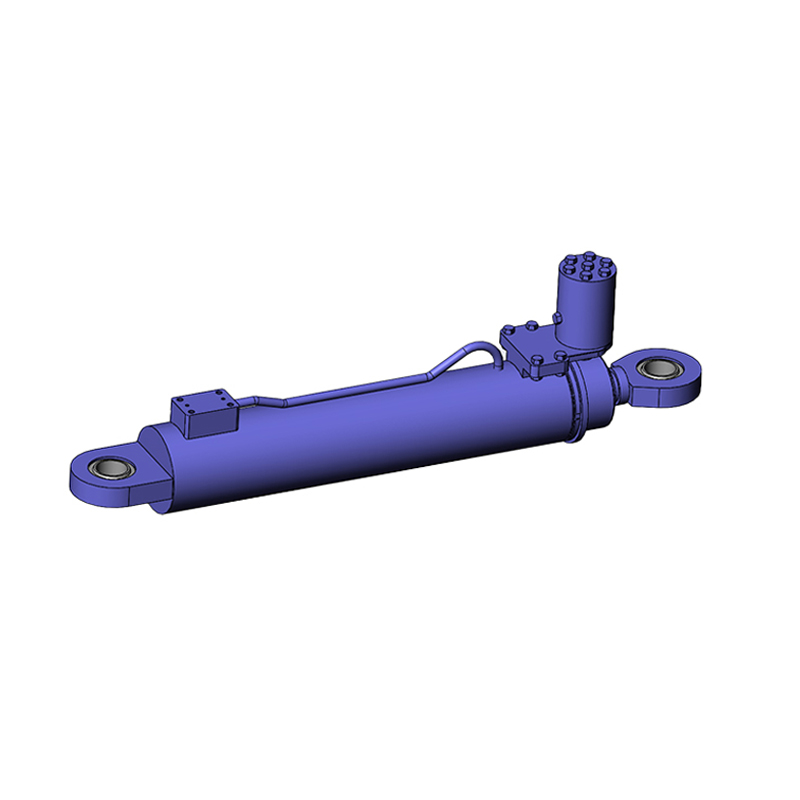
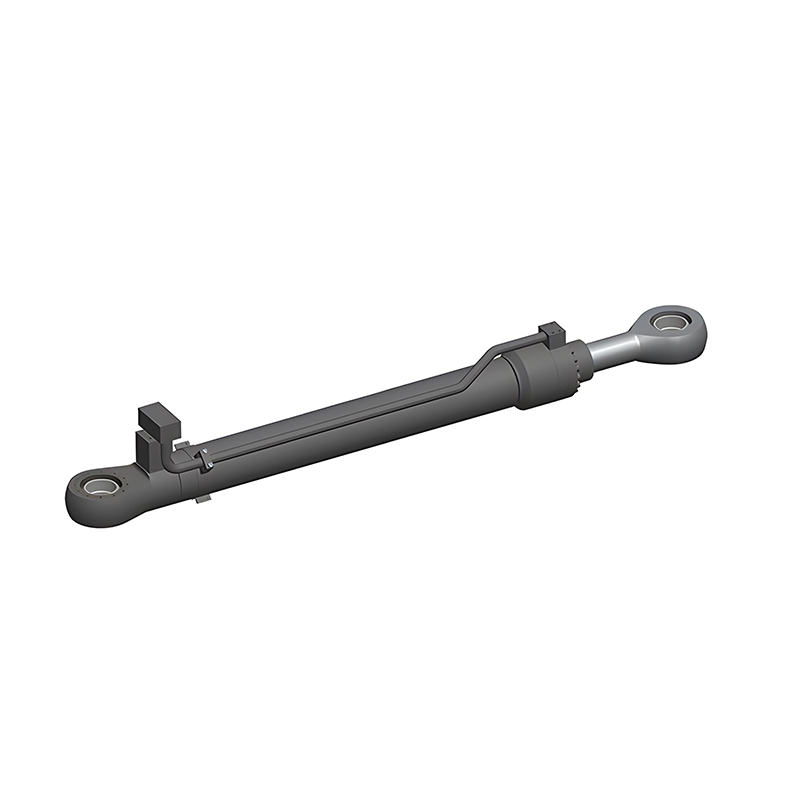 Excavator Hydraulic Cylinder with Optimized Cushioning and Corrosion-Resistant FinishThis cylinder is built for harsh excavator duty, featuring structural optimization and lightweight design. Its external coating and patented welding improve reliability, making it a key component for machines ranging from 1.5 to 700 tons.View Product →
The piston rod is the most visible part of a cylinder, and it takes a beating. Our rods start as cold-drawn or turned bar stock, then go through grinding to achieve a fine, uniform diameter. After grinding, the rod is hard-chrome plated. Hard chrome adds wear resistance and a corrosion barrier, and it is applied only after the base surface is clean enough to guarantee adhesion.
The plated rod is then polished to a mirror-like finish. A smooth rod surface reduces seal wear, lowers friction and prevents dirt from sticking to the rod when it retracts. Chrome thickness is typically controlled in the range of 20 to 30 micrometers, depending on the application and environment.
For marine and offshore cylinders, the rod receives additional protection because saltwater is unforgiving. For standard industrial units, the same plating line gives us consistent quality at a competitive cost.
While the barrel and rod get most of the attention, the piston and end caps are just as critical. The piston is machined to a precise outer diameter and carries the piston seals. In many designs it also includes bearing rings that centre the assembly inside the barrel. End caps close the cylinder at both ends and contain the ports through which hydraulic fluid enters and exits.
Clevises, spherical eyes and mounting brackets are machined or fabricated to suit the customer's mounting arrangement. This is where standardization and custom work meet: we make tie-rod cylinders, welded-body cylinders, telescopic units and special configurations. Each construction style has its own logic:
Assembly sounds straightforward, but it is where experience shows. Before any component reaches the line, it is cleaned to remove chips, grinding residue and dust. A single particle of contamination can scratch a bore or destroy a seal during the first stroke.
Our assembly sequence follows a strict order:
Torque values, seal lubrication and cleanliness standards are defined in our work instructions. The goal is a cylinder that behaves predictably from the very first stroke.
No cylinder leaves our workshop without proof that it can do the job. Testing is not a formality; it is the moment where material, machining and assembly are judged together.
| Test | What It Verifies | Typical Acceptance |
|---|---|---|
| Pressure test | Structural strength at elevated pressure | No leaks, no permanent deformation |
| Leak test | Seal performance at rated pressure | Zero external leakage |
| Cycle test | Durability under repeated strokes | Meets specified number of cycles |
| Force test | Output force at rated pressure | Matches nominal force value |
For marine and offshore cylinders, we add extra scrutiny because a seal failure at sea can cost days of downtime. Salt-laden air, temperature extremes and dynamic loads all challenge the cylinder in ways a test bench can only approximate. That is why our test records follow each unit and are kept on file for traceability.
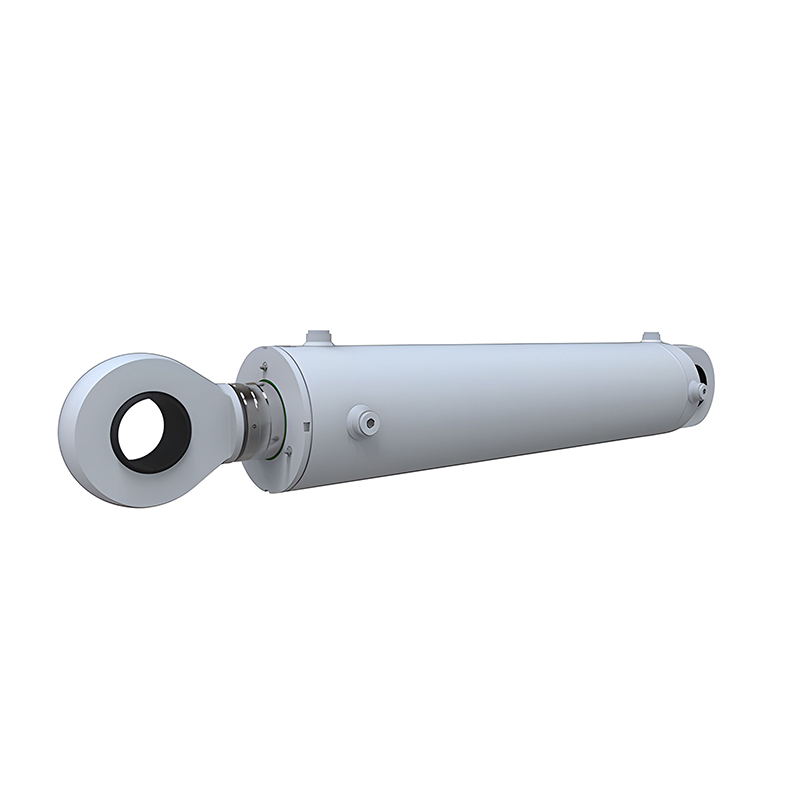
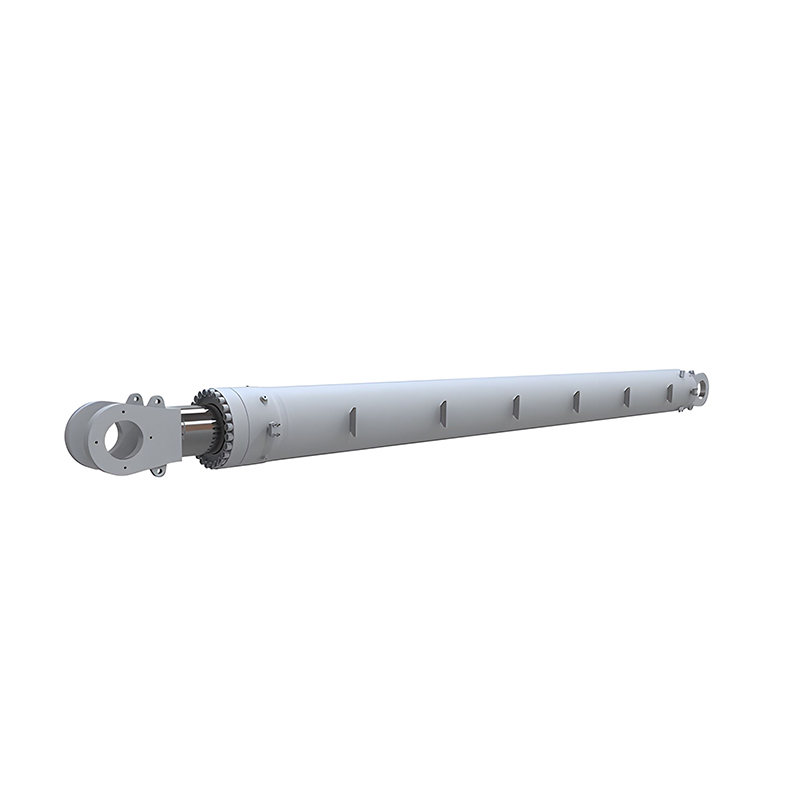 Marine Crane Hydraulic Cylinder with Enhanced Corrosion Resistance and Durable SealsDesigned for salt-laden offshore environments, this cylinder uses triple-layer chrome plating and specialized sealing to withstand extreme conditions. Salt spray tested over 200 hours, it suits ro-ro ships and mobile cranes, ensuring reliable operation.View Product →
So, how are hydraulic cylinders made? They are made by people who understand that precision is not one operation but a chain of operations. A good barrel is wasted on a poor rod, and a good seal is wasted on a contaminated assembly.
That is why we keep material selection, machining, plating, assembly and testing under one roof. It gives us control over every variable, and it gives our customers a single partner they can hold accountable. Whether you need an ISO-standard cylinder, a custom design or a replacement unit, the same process discipline applies.
For equipment builders, the practical takeaway is simple: choose a manufacturer that understands the full process, not just the final assembly. If you are developing a new machine or upgrading an existing one, talk to us early. The best cylinders are the ones where the manufacturing process is designed together with the application.
For agricultural equipment, where uptime is everything, this process discipline means cylinders that keep working through dust, moisture and long field hours.
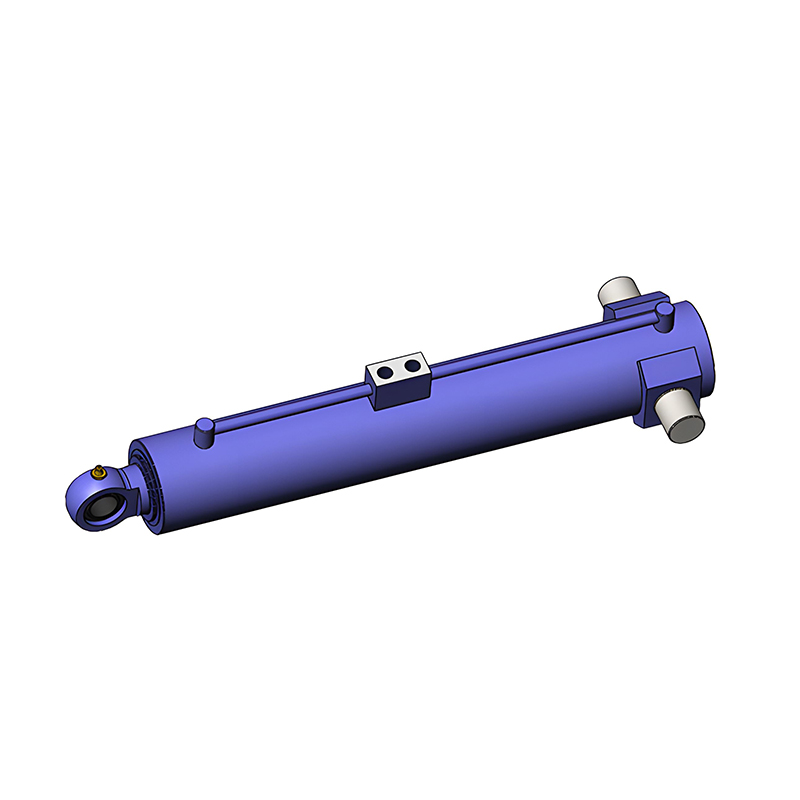
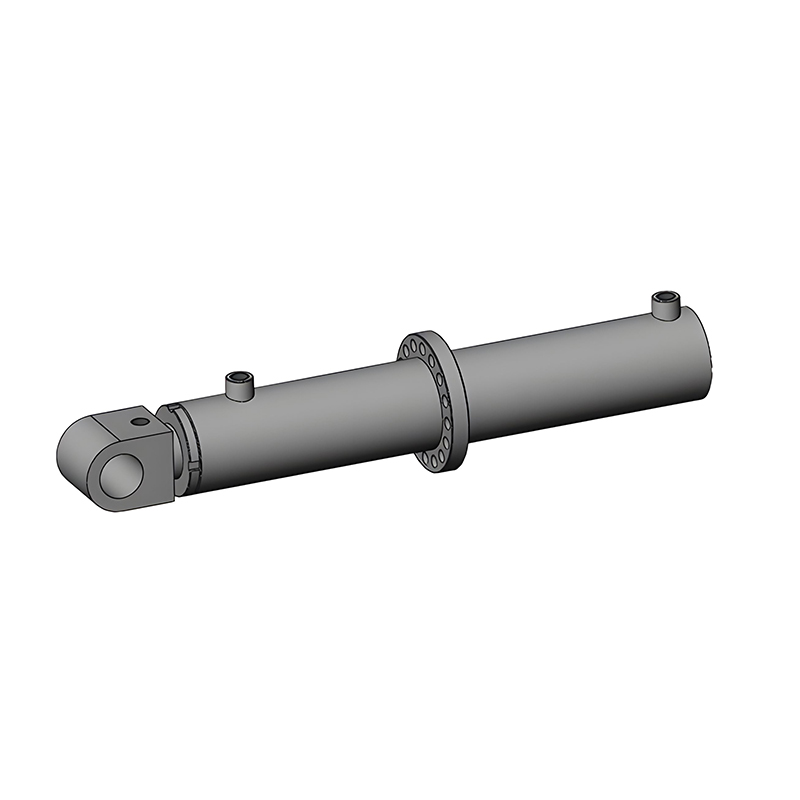 Agricultural Machinery Hydraulic Cylinder with Integrated Valve and Adjustable MountingThis cylinder supports agricultural uptime with compound sealing, an integrated hydraulic valve to save space, and a removable earring for easy installation. It offers corrosion resistance and cost-effective performance for diverse farming equipment.View Product →
Copyright © Jiangsu Hengcai Hydraulic Mechanical Co., Ltd. All Rights Reserved.
 Custom Hydraulic Cylinders Manufacturers