English
 中文简体
中文简体 русский
 عربى
عربىOuick Product Search
Provide Hengcai OEM program, product name and other information. The content of this information is for reference only.
2026-08-12
When a jack-up rig begins a repositioning operation in the North Sea, the hydraulic cylinders in its leg-jacking system may have sat idle for weeks. They must pressurize instantly, hold a load of several thousand tons without creeping, and keep performing that way for decades in salt-laden air. An oil drilling platform hydraulic cylinder is therefore not judged by its catalogue pressure rating alone. It is judged by corrosion resistance, fatigue life, sealing integrity, and the ability to work on demand after long periods of inactivity.
A drilling platform operates in one of the most corrosive environments in industrial service, and hydraulic cylinders are involved in nearly every load-bearing and motion-control function, from the drill floor to the seabed. The duties fall into four broad groups, and each group places a different combination of pressure, cycle count, and environmental stress on the actuator. Rig builders rarely pull oil drilling platform hydraulic cylinders from a generic catalogue; most are custom-engineered for the specific function and the rig's layout.
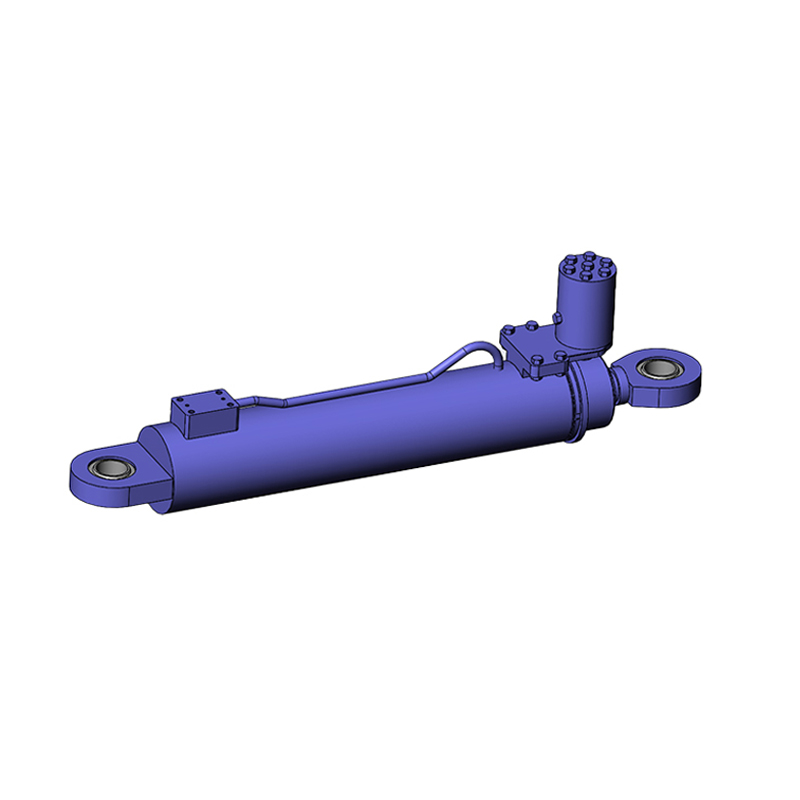
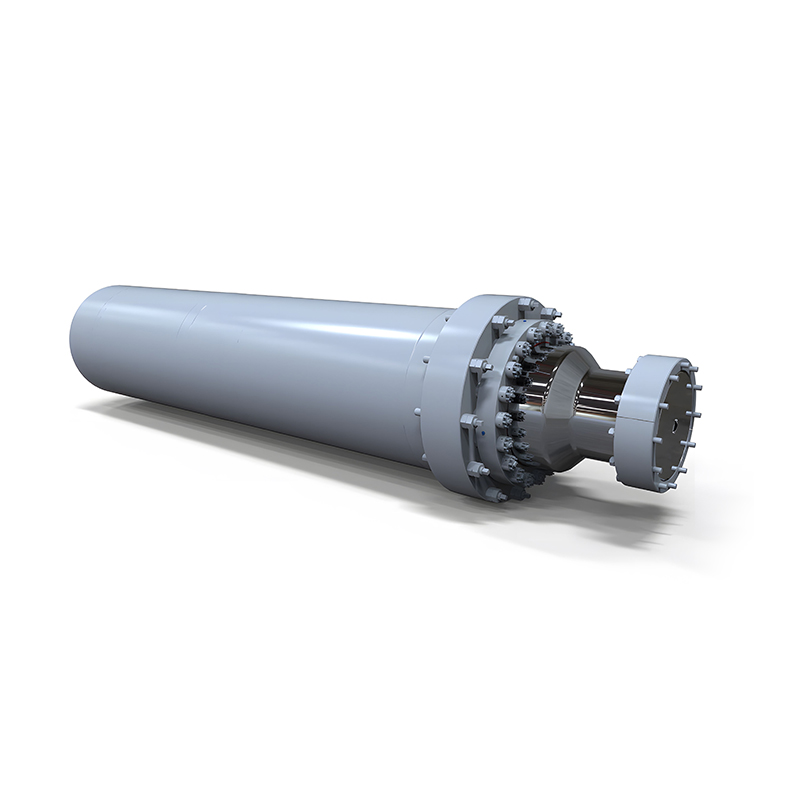
 Wholesale Oil Drilling Platform Hydraulic Cylinder Manufacturers, Suppliers - JiJiangsu Hengcai Hydraulic Mechanical Co., Ltd is China wholesale Oil Drilling Platform Hydraulic Cylinder manufacturers and Oil Drilling ...View Product →
On the drill floor, cylinders drive iron roughnecks that make up and break out drill-pipe connections, position pipe handlers, raise and lower the catwalk, and apply force to the auxiliary brake of the drawworks. These actuators run through high cycle counts and rapid reversals, and they see transient pressure spikes every time a connection is torqued. Because the tool joints are aligned by the cylinder stroke, rod straightness and side-load control matter as much as rated pressure.
The marine riser, the conduit between the rig and the wellhead on the seabed, must be kept in tension while the platform heaves with the waves. Riser tensioner cylinders usually work against nitrogen-charged accumulators, extending and retracting to absorb vertical motion while maintaining a near-constant upward force. A failure here does not simply stop drilling; it can damage the riser and jeopardize the well. These cylinders must hold pressure accurately over long periods and move smoothly at very low speeds.
Blowout preventer stacks are closed by hydraulic force. Closing units on the platform send pressurized fluid through subsea control pods to annular and ram preventers, and the cylinders in these systems remain dormant for long intervals before they are suddenly called on to operate. Fail-safe operation and zero leakage are not optional when the cylinder is part of the last line of defense between the well and the environment.
Pedestal cranes transfer supplies, tubulars, and subsea equipment between support vessels and the platform deck. Gangway systems that connect a platform to a vessel, along with hatch covers, winches, and the jacking systems of self-elevating rigs, all rely on cylinders designed for marine duty. A crane cylinder that fails while lifting a load over open water can quickly become a serious safety incident, which is why many operators specify marine crane hydraulic cylinders built to offshore standards rather than adapted industrial units.
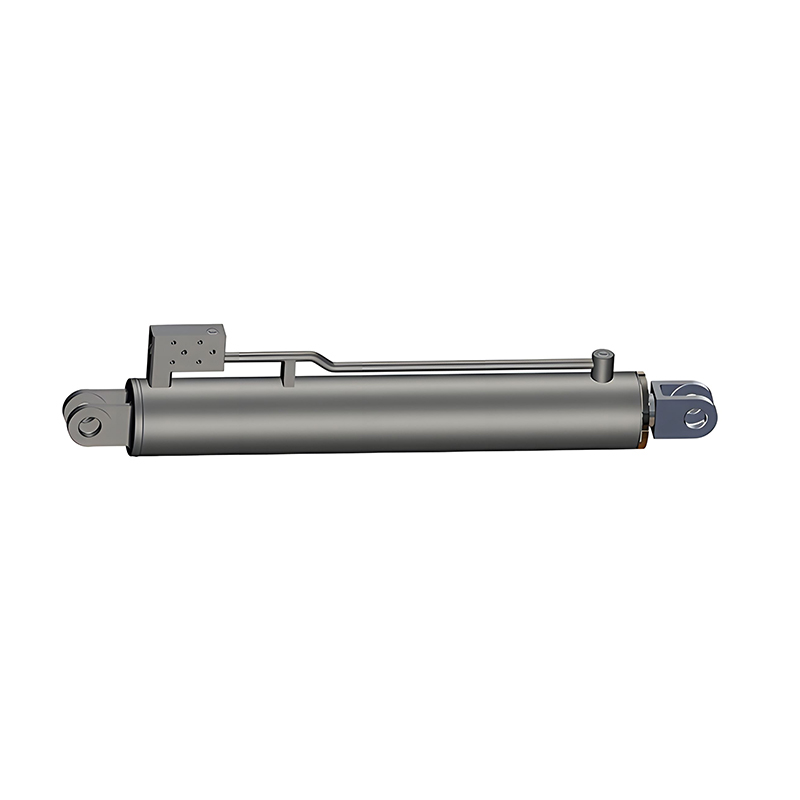
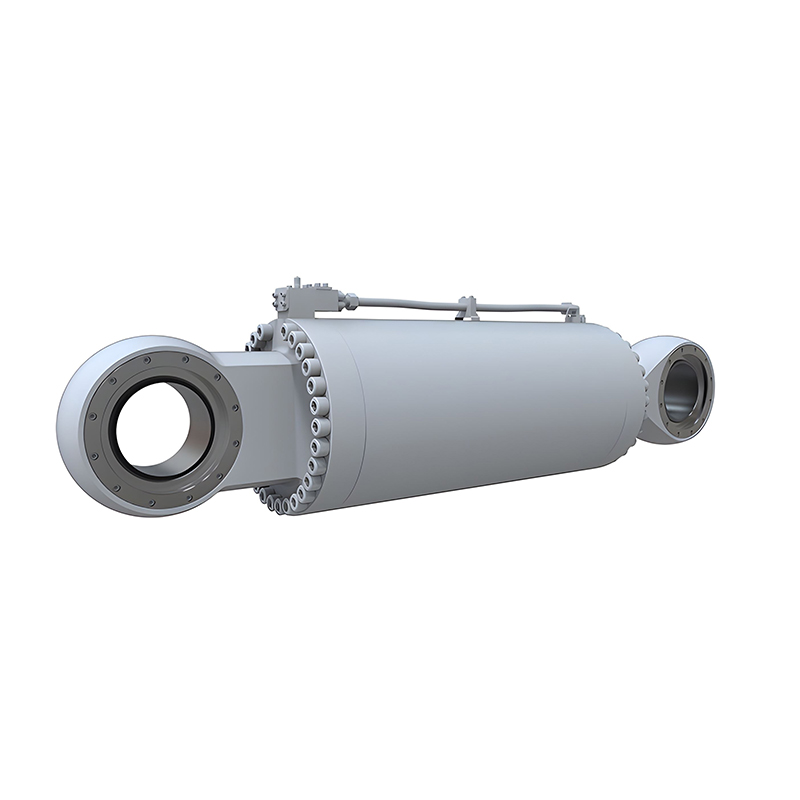
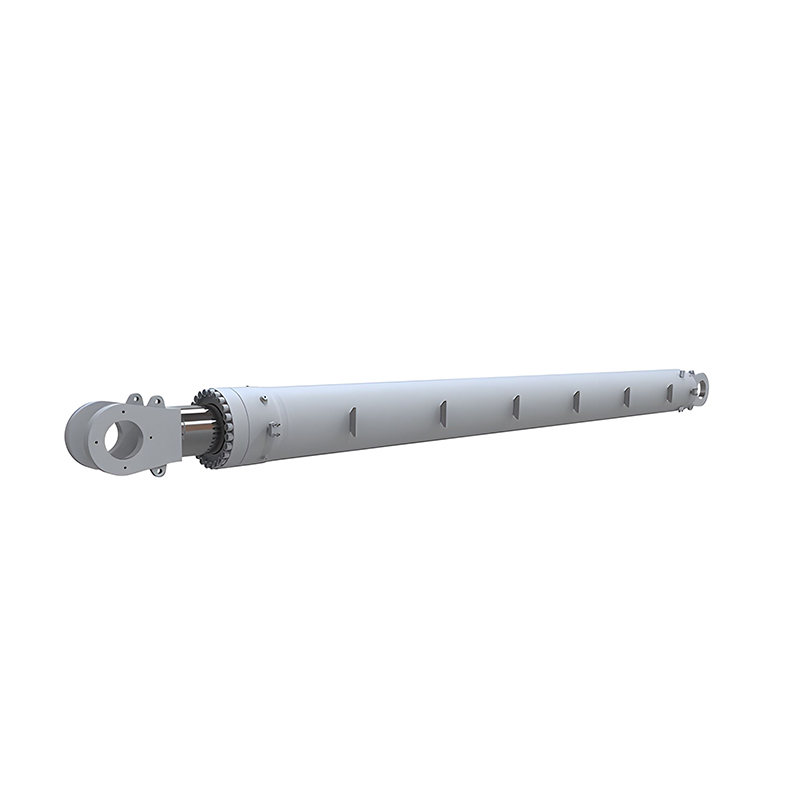 Wholesale Marine Crane Hydraulic Cylinder Factory, Manufacturers - Jiangsu HengcJiangsu Hengcai Hydraulic Mechanical Co., Ltd is China wholesale Marine Crane Hydraulic Cylinder factory and Marine Crane Hydraulic Cyli...View Product →
A cylinder rarely fails because of a single dramatic event. It fails because the environment slowly defeats the materials and seals. Understanding the failure mechanisms is the first step in getting the specification right.
Chloride ions attack exposed steel surfaces and produce pitting corrosion. Each pit acts as a stress raiser, and under cyclic loading a pit grows into a fatigue crack. Stainless steel improves the picture, but not all stainless grades perform equally: 316L resists chloride pitting much better than 410 or 17-4PH, while duplex alloys combine high strength with good seawater tolerance for deep-water components. Every external surface, including the barrel, rod, end caps, and mounting brackets, needs a corrosion strategy, not just the parts that touch seawater.
Drilling torque reactions, wave-induced heave, and crane lifts generate shock loads that a smooth-running industrial press never produces. The cylinder must be designed for fatigue life, not just static pressure. Rod diameter, barrel wall thickness, and the transition radii at welded attachments determine whether the actuator survives hundreds of thousands of load cycles or fails early at a weld. This is where a heavy-duty design with real safety margins separates an offshore cylinder from a standard industrial one.
Surface platforms in the North Sea or the Barents Sea operate near freezing, while equipment on the seabed never sees daylight. Seal compounds that work well in a warm climate can harden and leak at low temperature. At the same time, a riser tensioner may stay pressurized for weeks, so seal creep, gas permeation, and coating breakdown become real concerns. The specification has to cover the actual operating temperature range and the real duty cycle, including long periods of static hold.
The practical difference between a standard industrial cylinder and an offshore-rated cylinder is not a single upgrade. It is a chain of decisions on materials, sealing, and construction, and each decision affects the next.
For seawater contact, 316L stainless steel barrels are common because they resist chloride pitting far better than painted carbon steel. Where carbon steel is used for cost or weight reasons, the barrel needs a protective coating system, and the honed working surface has to be protected as well. Piston rods need both hardness and corrosion resistance. Hard chrome over corrosion-resistant steel is a proven combination; for more demanding platforms, electroless nickel or thermally sprayed ceramic coatings on the rod reduce the risk of pitting that can destroy the seal surface.
The seal package has to handle the hydraulic fluid, the ambient temperature range, and external contamination. Chloride crystals, sand, and sea spray can be pulled into the gland area, so heavy-duty wipers and scrapers are standard. Seal materials such as hydrogenated nitrile (HNBR) and fluorocarbon (FKM) are selected for temperature range and fluid compatibility, while polyurethane provides toughness and wear resistance in the rod seal. The goal is to keep water and contaminants out and keep pressure in, for years between overhauls.
Welded-body cylinders reduce the number of external threaded parts that can corrode and seize. Where tie-rod construction is used, the tie rods themselves must be plated or coated to resist corrosion. Mounting style also matters: heavy clevises and trunnion mounts allow the cylinder to align with the load and reduce side loading, which protects both the rod and the seals. If you compare corrosion-resistant hydraulic cylinders from different suppliers, look closely at how each one handles these details.
| Design element | Why it matters offshore | Common offshore approach |
|---|---|---|
| Cylinder barrel | Chloride pitting and seawater attack | 316L or duplex stainless, or coated carbon steel |
| Piston rod | Bending loads combined with corrosion | Hard chrome over stainless, or ceramic-coated rod |
| Seals | Cold water, salt ingress, long idle periods | HNBR/FKM compounds with heavy-duty wipers |
| Body construction | Leak paths and corrosion of fasteners | Welded or flanged design with minimal threads |
| Surface protection | UV, impact, and salt exposure on deck | Epoxy-zinc marine paint with documented thickness |
| Testing and traceability | Unplanned failure is expensive and dangerous | Pressure testing, material certificates, lot traceability |
Use the checklist below as the starting point for an inquiry, and be prepared to provide the actual operating conditions rather than just a pressure and a stroke.
Most drilling-platform cylinders are built to drawings supplied by the rig designer, the package vendor, or the operator's engineering team, because bores, strokes, ports, and mounting interfaces differ from one rig to the next. The manufacturer therefore needs genuine engineering capability, not just machining capacity. Look for a supplier that can review the drawing, propose material and seal upgrades, build a prototype, and move into repeat production with consistent quality.
A manufacturer with decades of experience across oil and gas, marine, and heavy industrial applications is better positioned to catch design issues before they reach production. Jiangsu Hengcai, for example, has manufactured hydraulic cylinders in Jiangsu, China since 1988 and exports to customers in the United States, Japan, and Russia. A supplier with that background can handle drawing review, prototype work, and series production under one roof. When evaluating any potential partner, look for a certified hydraulic manufacturer with documented quality systems, and review its oil and gas hydraulic cylinders portfolio for evidence of work in demanding offshore environments.
In practice, the difference between a cylinder that lasts one campaign and one that lasts the life of the rig is decided in the detail: material grades, coating specifications, seal selection, and the discipline to test and document every unit. Do not measure an oil drilling platform hydraulic cylinder by its pressure rating alone. Measure it by the engineering behind it and by the evidence that it has been built for the environment in which it will work.

Copyright © Jiangsu Hengcai Hydraulic Mechanical Co., Ltd. All Rights Reserved.
 Custom Hydraulic Cylinders Manufacturers