English
 中文简体
中文简体 русский
 عربى
عربىOuick Product Search
Provide Hengcai OEM program, product name and other information. The content of this information is for reference only.
2026-07-08
A hydraulic cylinder is a mechanical actuator — essentially a metal tube with a piston inside — that uses pressurized hydraulic fluid to generate linear force and motion, converting the fluid's pressure energy directly into straight-line mechanical force. Because hydraulic fluid is nearly incompressible, a cylinder small enough to hold in two hands can generate tens of thousands of pounds of force, which is why hydraulic actuators dominate heavy equipment where compact size and massive force both matter.
You'll find hydraulic cylinders wherever a machine needs to push, pull, or lift with precision: excavator arms, dump truck beds, factory presses, forklift masts, and aircraft landing gear all rely on the same basic principle. The table below gives a quick overview before we look at how they work, how to size one, and which type fits which job.
| Specification | Typical Range | Notes |
|---|---|---|
| Operating pressure | 1,500 to 5,000+ PSI | Mobile equipment usually runs 2,000 to 3,000 PSI; welded industrial cylinders can exceed 5,000 PSI |
| Bore diameter | 1 inch to 24+ inches | Larger bore means more force at the same pressure |
| Stroke length | A few inches to 20+ feet | Telescopic designs achieve the longest strokes in the shortest retracted length |
| Force output | A few hundred lbf to 100+ tons | Depends on bore diameter and system pressure |
Every hydraulic cylinder operates on Pascal's law: pressure applied to a confined fluid is transmitted equally in every direction throughout that fluid. A hydraulic pump pressurizes oil and sends it through a port into one side of the cylinder. That pressurized oil pushes against the piston, and because the fluid can't compress, nearly all of the pump's energy converts directly into linear force at the rod.
Many cylinders also include cushioning — a tapered plunger near the end of the piston that restricts fluid flow in the final fraction of an inch of travel, slowing the piston before it reaches the end cap. This reduces the mechanical shock and noise that would otherwise occur every time the cylinder reaches full extension or retraction.
Hydraulic cylinder force follows one formula: Force (lbf) = Pressure (PSI) × Piston Area (in²), where piston area is calculated as π × (bore diameter ÷ 2)². This relationship is why hydraulic actuators can be so much smaller than pneumatic or electric ones for the same job — hydraulic systems commonly run at 2,000 to 3,000 PSI, while shop air runs at roughly 100 to 150 PSI, so a hydraulic cylinder needs only a fraction of the piston area to produce the same force.
Take a cylinder with a 4-inch bore running at 2,000 PSI. Piston area works out to π × (4 ÷ 2)² = 12.57 square inches. Multiply that by 2,000 PSI and the cylinder produces 25,133 pounds of force on extension — over 12.5 tons from a piston smaller than a dinner plate. The table below shows how quickly force scales with bore size at the same pressure.
| Bore Diameter | Piston Area | Approx. Extend Force |
|---|---|---|
| 2 inches | 3.14 sq in | 6,283 lbf |
| 3 inches | 7.07 sq in | 14,137 lbf |
| 4 inches | 12.57 sq in | 25,133 lbf |
| 6 inches | 28.27 sq in | 56,549 lbf |
On the return stroke, fluid pushes against the rod side of the piston, and the piston rod itself occupies part of that face, reducing the available area. Using the same 4-inch bore cylinder with a 1-inch rod, the rod's cross-sectional area is 0.79 square inches, leaving 11.78 square inches on the rod side. At the same 2,000 PSI, retraction force drops to roughly 23,562 pounds — about 6% less than the extend force. This is why cylinder spec sheets list extend and retract force separately.
Hydraulic cylinders fall into two functional categories based on how they move.
Single-acting cylinders apply hydraulic force in one direction only, through a single port. Something else — gravity, the weight of the load, or an internal spring — returns the piston to its starting position once pressure is released. They're simpler to plumb and generally less expensive, which makes them common in dump truck beds, simple jacks, and other applications where the load itself provides the return force.
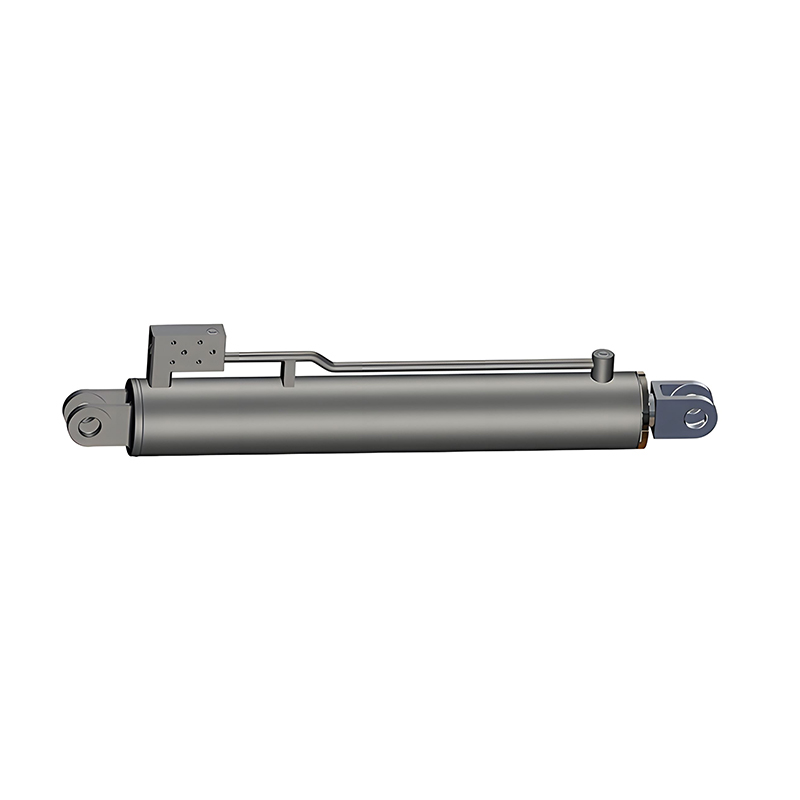
Double-acting cylinders use two ports and can apply hydraulic force in both directions — extending and retracting under power — which is why they make up the majority of cylinders in industrial and mobile equipment. They provide faster cycle times, more precise positioning, and genuine pull force rather than just push, making them the standard choice for excavator arms, press cylinders, and any application requiring repeatable, controlled motion in both directions.
Beyond how a cylinder moves, its physical construction determines how much pressure it can handle, how easily it can be repaired, and where it fits.
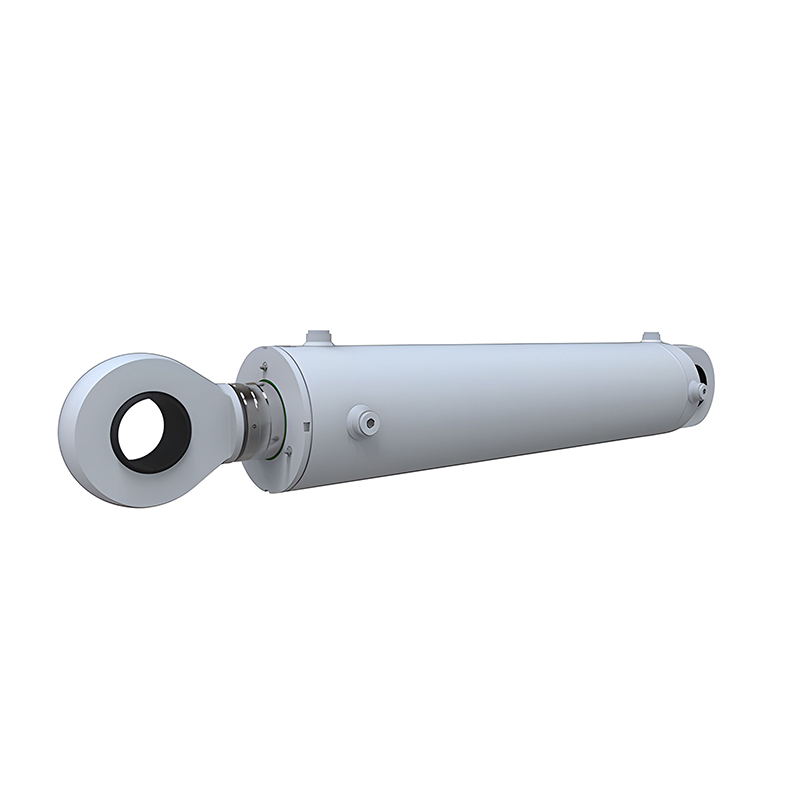
Tie-rod cylinders use four to twenty threaded steel rods running the length of the barrel to clamp the end caps in place. Built to National Fluid Power Association (NFPA) standards, they are fully interchangeable between manufacturers and can be disassembled with common wrenches for field repair. Their trade-off is bulk: at pressures above roughly 3,000 PSI, the tie rods themselves can stretch slightly, leading to seal "breathing" and eventual leaks, which caps their use in the highest-pressure applications.
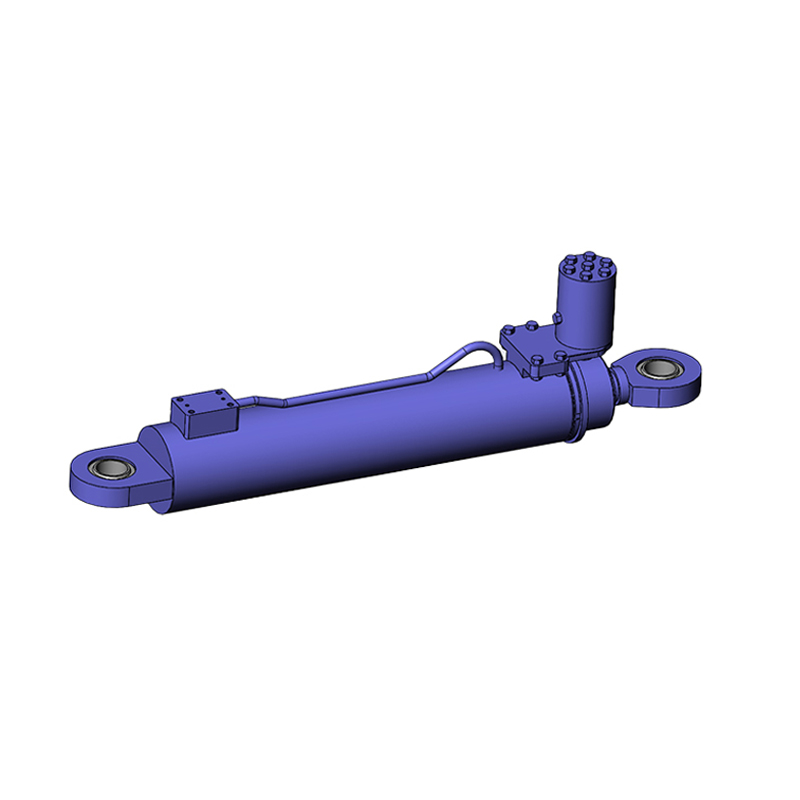
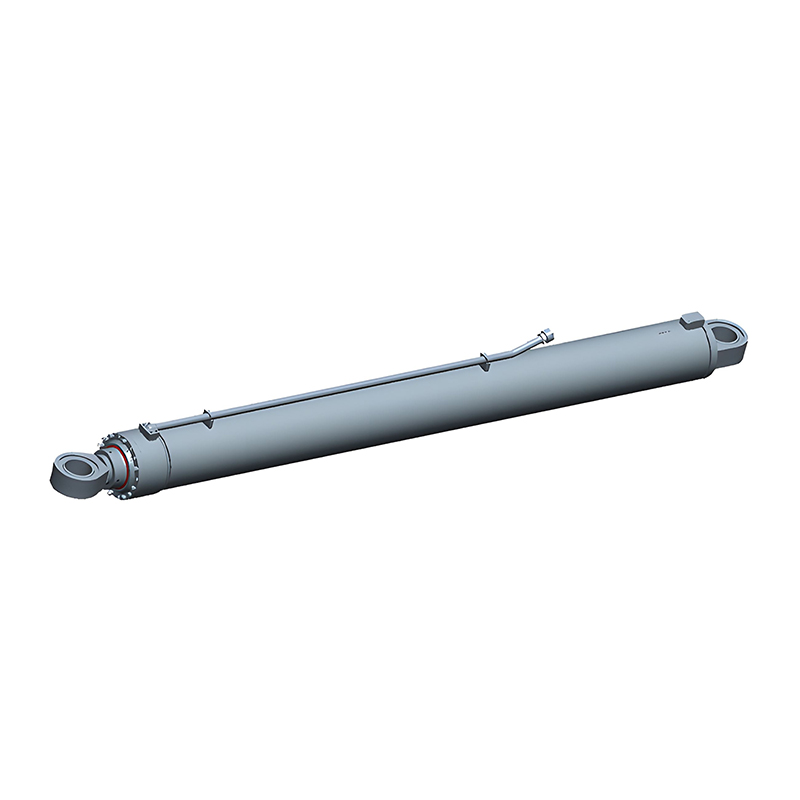
Welded cylinders permanently fuse the end caps to the barrel, eliminating tie rods entirely. The compact, rugged design routinely handles 5,000 PSI or more, making it the dominant choice for excavator arms, crane booms, and other mobile equipment where space is tight and pressure is high. The trade-off runs the other way: without tie rods to unbolt, a welded cylinder typically needs specialized tools, or even a lathe, for a full rebuild.
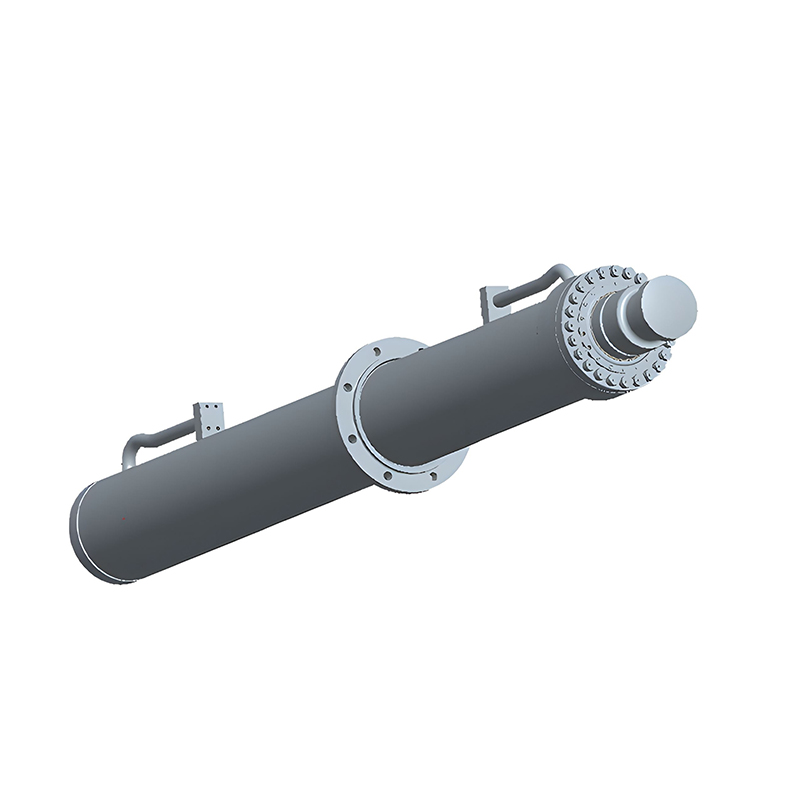
Telescopic cylinders nest two to six progressively smaller stages inside one another, so a cylinder that retracts to a few feet can extend to several times that length. This makes them the standard choice for dump truck beds, dump trailers, and other applications needing a long stroke with minimal retracted length. Most telescopic cylinders are single-acting; double-acting versions exist but require custom engineering and cost significantly more.
| Construction | Typical Pressure Rating | Best Use Case |
|---|---|---|
| Tie-rod | Below 3,000 PSI | Manufacturing, material handling, injection molding |
| Welded (mill-type) | 5,000 PSI or more | Excavators, cranes, mobile and construction equipment |
| Telescopic | Application-specific, usually single-acting | Dump beds, dump trailers, long-stroke lifts |
Hydraulic cylinders show up anywhere a machine needs controlled linear force, from small service jacks to some of the largest equipment ever built. On large mining excavators, boom cylinders with bores of 10 inches or more are common, and at typical system pressures can generate well over 100 tons of force to move a single bucket load of material.
Matching a cylinder to the job comes down to defining a short list of specifications before you order or design one in.
Getting the force and pressure numbers right matters more than any other decision. An undersized cylinder running at its rated pressure limit has no reserve capacity for load spikes, friction, or a partially clogged filter, all of which are common in real-world operation.
Most hydraulic cylinder failures trace back to contaminated fluid or a damaged rod surface, not the cylinder itself. Keeping hydraulic fluid clean, since fine particles score the rod and seals from the inside out, protecting exposed rods from dirt and impact, and replacing seals at the first sign of external leakage all extend service life significantly. A well-maintained industrial cylinder can run for a decade or more, while a neglected one running dirty fluid or a scored rod can fail within a year.

Copyright © Jiangsu Hengcai Hydraulic Mechanical Co., Ltd. All Rights Reserved.
 Custom Hydraulic Cylinders Manufacturers