English
 中文简体
 русский
 عربى
Ouick Product Search
Provide Hengcai OEM program, product name and other information. The content of this information is for reference only.
2026-11-19
When someone asks how hydraulic cylinders are rated, the honest answer is that no single number tells the whole story. A cylinder may carry a pressure rating, a force rating, a temperature range, a speed limit, a fatigue life, and a standard mounting envelope. Those figures only make sense together, and they only make sense for the job the cylinder is expected to do. A rating is not a trophy value on a brochure. It is a declared operating envelope, supported by design, materials, testing, and application experience.
That distinction matters because buyers often compare cylinders by one headline figure, such as bore size or maximum pressure. A better approach is to read the rating as a package: what the cylinder can push or pull, how often it can do it, at what pressure and temperature, with which fluid, and under which standard. The sections below explain the main rating dimensions and how they connect in real equipment.
A hydraulic cylinder is rated across three layers. The first is geometry: bore, rod diameter, stroke, mounting type, and port size. The second is pressure capability: nominal, peak, proof, and burst pressure. The third is service condition: duty cycle, speed, temperature, fluid cleanliness, corrosion exposure, and expected life. A cylinder that is excellent on one layer but weak on another is not correctly rated for the application.
For example, a cylinder may be rated for 250 bar nominal pressure, but if the rod is undersized for a long push stroke, buckling resistance can become the limiting factor. A cylinder may have a high force rating, but if the seals cannot handle the fluid temperature, its real service rating is lower. A cylinder may pass a proof test, but if it is installed with side loads it was never designed for, the mounting and rod guidance may fail before the pressure limit is reached. Good rating practice connects the datasheet to the machine.
Pressure is usually the first number buyers compare, but the word “rated” can mean several different things. Nominal or working pressure is the continuous pressure the cylinder is designed to handle in normal service. Peak pressure is a short-term allowance for shock, stall, or transient events. Proof pressure is a test pressure used to verify strength without permanent deformation. Burst pressure is the catastrophic failure threshold. These are not interchangeable, and a supplier should state which one is being quoted.
| Rating term | What it describes | Why it matters |
|---|---|---|
| Nominal or working pressure | The continuous pressure the cylinder is designed to handle in normal service. | Sets the baseline for force, seal selection, and hose and valve compatibility. |
| Peak pressure | A short-term pressure allowed during shock, stall, or transient events. | Often higher than nominal, but duration and frequency are limited. |
| Proof pressure | A test pressure used to verify strength without permanent deformation. | Confirms structural quality; it is not a normal working pressure. |
| Burst pressure | The pressure at which the cylinder fails catastrophically. | Used with a safety factor; it should never be treated as an operating limit. |
| Fatigue or cycling rating | The pressure cycling life before leakage or structural damage becomes likely. | Critical for high-cycle machinery, not just static holding applications. |
The relationship between these values depends on the standard, material, wall thickness, weld design, seal system, and intended safety factor. A common safety approach compares burst pressure to nominal pressure, but the exact factor should come from the applicable standard or the manufacturer's validated design data. Buyers should ask whether the nominal rating is continuous, what peak pressure is allowed and for how long, and whether proof and burst tests are performed on every batch or on sample units.
For equipment that works at the upper end of the pressure range, our high-pressure hydraulic cylinders are designed around the actual duty cycle, not just a headline bar figure. The useful question is not “What is the highest pressure you can print?” but “What pressure can this cylinder sustain repeatedly without shortening seal life or risking structural fatigue?”
Force rating is usually derived from bore size and pressure. In simple terms, push force equals pressure times the full piston area. Pull force equals pressure times the annulus area, which is the piston area minus the rod area. That is why a cylinder with a large rod can have a noticeably lower pull force than push force at the same pressure. If a supplier quotes a “100-ton cylinder,” ask whether that figure is push or pull, at what pressure, and with which rod diameter.
Force ratings also interact with stroke and mounting. A long stroke cylinder in compression needs buckling checks. A cylinder with side loading needs guide bearings, proper mounting, or an external guide. A cylinder used for holding a load may need pilot-operated check valves or load-holding valves, and the rating conversation should include the circuit, not only the component. In many real failures, the cylinder was working within its pressure rating but outside its mechanical or hydraulic system rating.
Another practical point is that force at the rod end is not always useful force at the machine. Linkage geometry, friction, seal drag, back pressure, and cushioning can reduce effective output. A good cylinder rating should therefore be tied to a calculated duty requirement, not a rough guess based on bore alone.
Pressure and force are only the visible part of the rating. The service envelope also includes how often the cylinder cycles, how fast it moves, how hot or cold it runs, and how long it must last between rebuilds. These factors affect seal selection, surface finish, rod coating, bearing material, and testing requirements.
This is where application-specific design becomes valuable. A cylinder that is strong but overheats, leaks, or corrodes is not correctly rated for the job. In our experience, the most useful rating discussions start with the machine's working cycle and environment, then move to bore, pressure, and standard dimensions.
Hydraulic cylinder ratings are often expressed through standards because standards define mounting dimensions, bore and rod series, pressure ranges, port positions, and tolerances. ISO 6020 and ISO 6022, NFPA recommended practices, DIN, JIS, and customer-specific drawings all provide a common language between cylinder suppliers and machine builders. When a cylinder is used as a replacement part, interchangeability is part of the rating: a cylinder may be strong enough, but if the mounting, stroke, rod end, or port location does not match, it is not rated for that machine.
For OEM and replacement markets, ISO standard hydraulic cylinders help reduce integration risk because the envelope is already defined. Metric and imperial standards serve different markets, and interchangeable cylinders can bridge the two when a machine is imported, rebuilt, or adapted. The key is to compare the full dimensional and functional envelope, not only the pressure line on the nameplate.
In construction equipment, excavator cylinders face shock loads, contamination, and high cycle counts. A nominal pressure rating may be less important than fatigue life, rod protection, and resistance to bending. A cylinder that is rated for the pressure but not for the digging shock will still fail early.
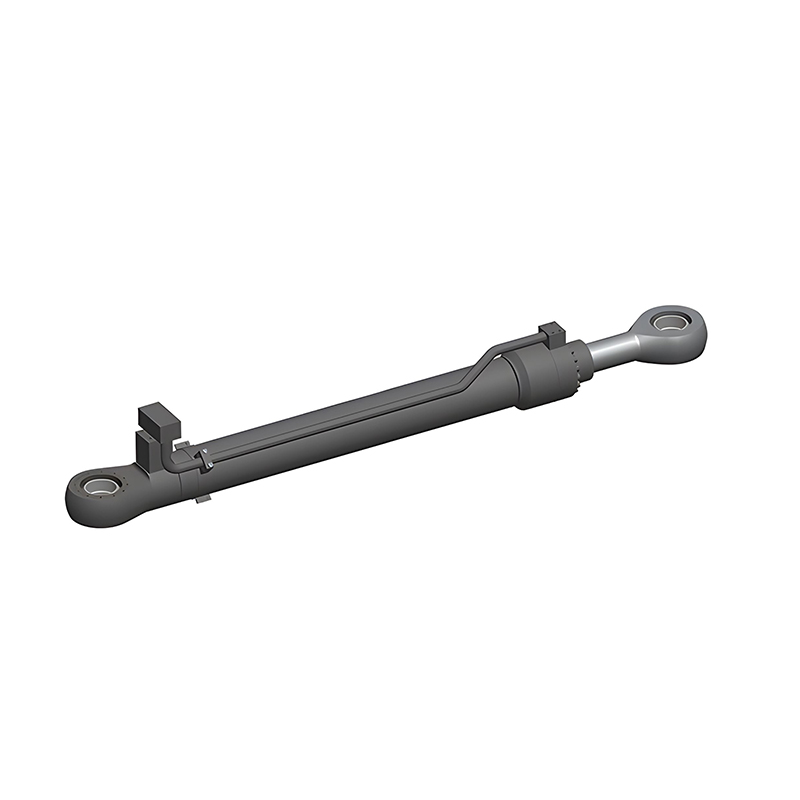 Excavator Hydraulic Cylinders for Severe-Duty Digging CircuitsCovers 1.5–700 t excavators with boom, arm, bucket and attachment duties, emphasizing cushioning, rigidity and seal life under shock loads.View Product →
Our excavator hydraulic cylinders are built with the understanding that boom, arm, and bucket circuits do not see gentle laboratory pressure curves. They see impact, heat, dust, and operator abuse. The rating should reflect that reality through material choice, weld quality, rod surface finish, and seal selection.
Marine and offshore cylinders add corrosion, salt spray, low-speed high-force holding, and inspection requirements. A pressure rating alone is not enough. The rating must also cover coating, material grade, drain and vent arrangements, and the consequences of a failed rod seal in a critical holding function.
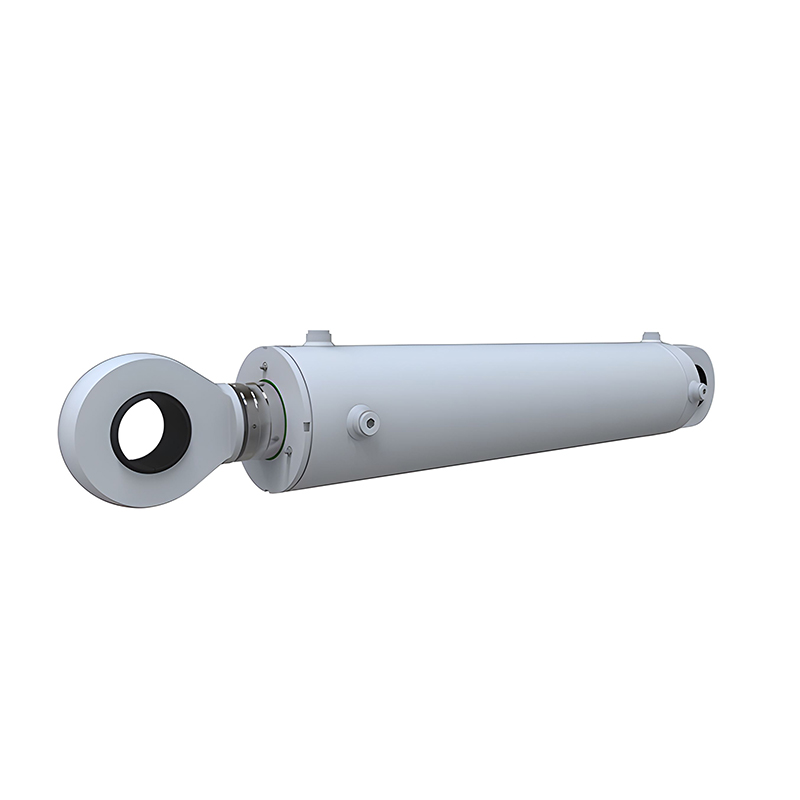 Marine Machinery Hydraulic Cylinders for Corrosive ServiceDesigned for steering gear, lifeboat drop gear and deck machinery, with corrosion protection and sealing suited to salt-laden, humid conditions.View Product →
Marine machinery cylinders are often judged by their ability to keep working in a harsh atmosphere, not just by their maximum bar rating. That is why corrosion resistance and service access belong in the rating conversation from the beginning.
Industrial press cylinders are rated around force, rigidity, repeatability, and structural safety. Pressure intensification, decompression control, and guided loading can matter more than raw bore size. A press cylinder that holds force well but deflects under load may still be unsuitable for precision work.
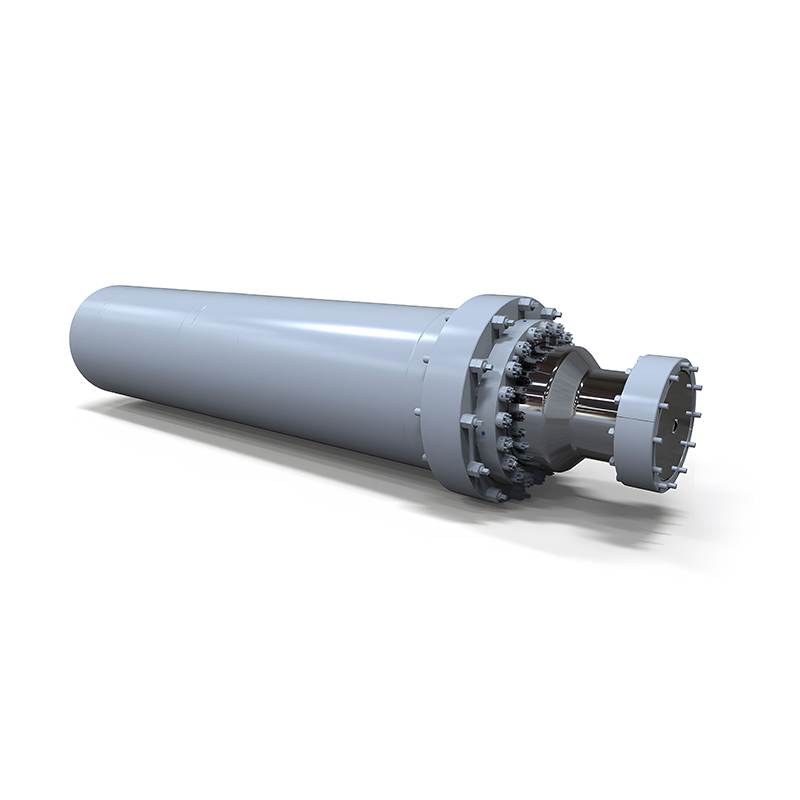 Hydraulic Press Cylinders for High-Impact Forming EquipmentBuilt for presses, forging and stamping lines with rigid guide support and quenched, chrome-plated plungers under high cycle and side loads.View Product →
Hydraulic press cylinders are a good reminder that “rated force” should be stated at a defined pressure and with a defined structural condition. The same principle applies to mining, sanitation, agriculture, and logistics equipment: the application decides which part of the rating is dominant.
A practical rating check usually starts with a short list of questions. If a supplier cannot answer these clearly, the datasheet is probably incomplete.
These questions also help separate a commodity cylinder from an application-matched cylinder. A low-cost cylinder may be perfectly adequate for a light-duty application, while a heavy-duty machine may need a higher safety factor, better filtration protection, or a more robust rod coating. The right rating is the one that matches the machine's working life, maintenance interval, and failure consequences.
At Jiangsu Hengcai Hydraulic Mechanical, we have spent more than three decades working with machine builders across construction, coal mining, marine, sanitation, agriculture, and industrial equipment. That experience has taught us that ratings are most useful when they are explained in plain language and tied to real operating conditions. A cylinder is not “rated” simply because a catalogue says so. It is rated when its pressure, force, duty, environment, standard, and test evidence all support the job it will do.
So the next time you compare hydraulic cylinders, look past the single headline number. Ask what the rating covers, how it was verified, and which limit will be reached first in your machine. That conversation is usually more valuable than a few extra bar on a specification sheet.
Recommended Products

Copyright © Jiangsu Hengcai Hydraulic Mechanical Co., Ltd. All Rights Reserved.
 Custom Hydraulic Cylinders Manufacturers